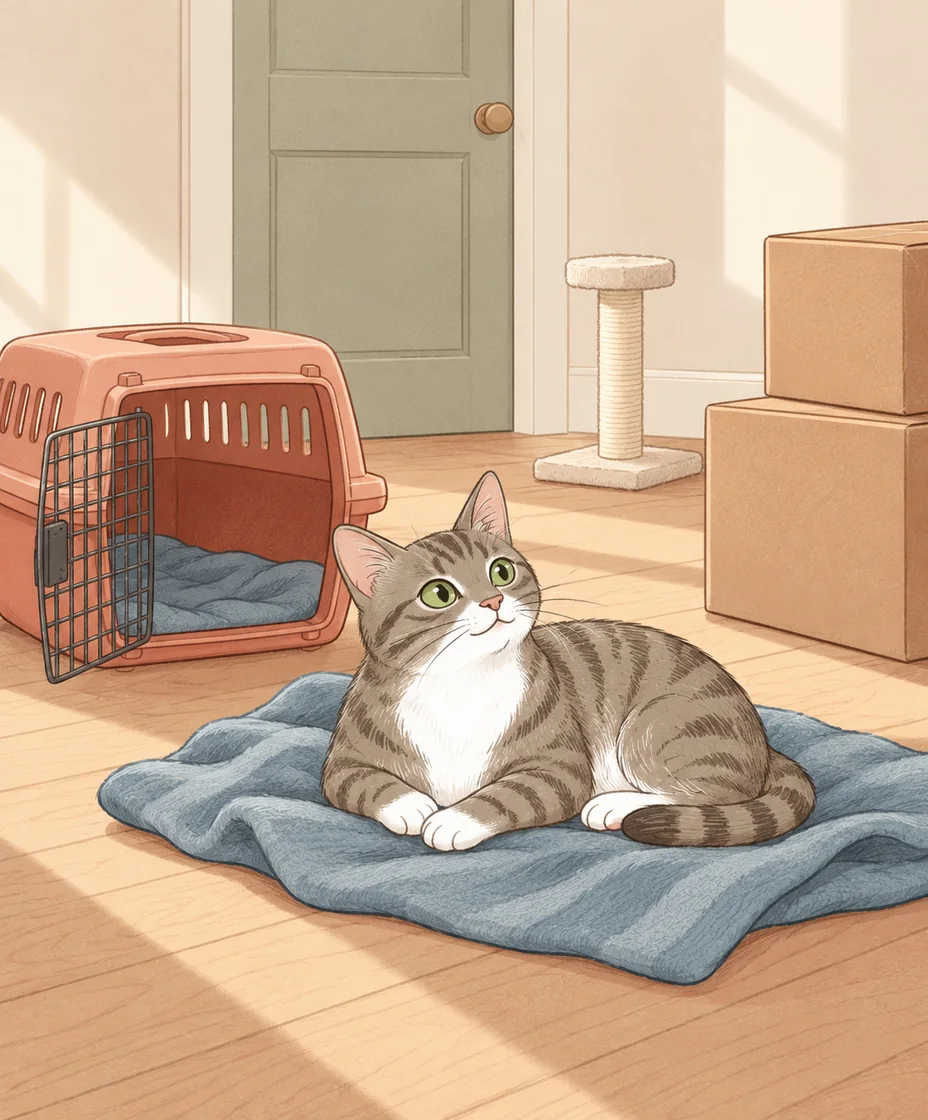
When moving house with a cat, prepare a quiet, secure room at both addresses and plan the transfer between them in a closed carrier. Keep the cat away from removal traffic, take familiar belongings and assign one person to coordinate their care. At the new home, allow time to settle indoors. A moving date is a reason to prepare transport early, not a deadline for finishing training.
Decide where the cat will be before packing starts
This guide is for moving an existing pet cat to a different home. The practical problem is that doors, furniture and people’s attention all change at once. Write down where the cat will be while each part of the move happens.
Cats Protection recommends choosing a quiet room in each home, introducing the current room before the move and using familiar bedding in the new one. Tell everyone helping which room must stay closed; a door sign can reinforce that instruction. If secure rooms are unavailable, arrange suitable temporary care in advance, considering the cat’s needs.
Keep the cat’s essentials accessible rather than packed into the removal load. Label a bag for their food, bowls, litter supplies, familiar bedding and care information. Give it to the person responsible for the cat, so arrival does not depend on finding an unmarked box.
Prepare the carrier before you need it
FelineVMA recommends leaving the carrier in the home with familiar bedding, allowing time for investigation and avoiding a last-minute chase. Pounce’s Carrier Confidence lessons separate entering the carrier, accepting its door and being carried. Work on the comfortable stage you have, without compressing those steps into moving morning.
If loading or travel is difficult and the move is approaching, contact your veterinary team beforehand for an individual transport plan. Explain previous reactions and any health needs. Follow their advice on feeding and prescribed support; do not improvise medication or delay necessary care until training is complete.
Use a correctly assembled, securely closed carrier for the journey, supported underneath when carried. Secure it in the vehicle according to appropriate carrier and vehicle instructions. Never let the cat roam in the car. A harness or a good recall does not replace the carrier.
Source: FelineVMA: Getting your cat to the veterinarian (page timestamp December 1, 2025)
Give every transfer a named person and a check
Use this handover sheet alongside the welfare guidance above. It is our planning aid, not a tested safety protocol. Replace “someone will do it” with a name and confirm each check aloud before proceeding. If plans change, update the person receiving the cat.
| Moment | Name the responsible person | Confirm before the next step |
|---|---|---|
| Removal work starts | Who checks the old room? | The cat is accounted for inside; the room is secure; helpers know not to enter. |
| Leaving the old home | Who loads and carries the cat? | Carrier assembly and latch checked; cat-care bag and contact details travel with them. |
| Arriving at the new home | Who checks the destination room? | The room is ready and secure before the carrier is opened; no unloading route crosses it. |
| The move team leaves | Who takes over the evening’s care? | The caregiver knows where the cat is, what they have eaten and any care instructions. |
Source: Battersea: How to move home with your cat (published May 25, 2023; updated October 2, 2026)
Make the first room usable, then allow exploration
The RSPCA recommends accessible toileting, a quiet resting place, hiding opportunities and suitable activity. Put the litter tray away from eating and sleeping areas. Provide separate resources and space where cats can avoid one another; sharing the same address does not mean they must share a carrier or a small room.
Once the new room is secured, open the carrier and let your cat emerge without pulling them out. Keep familiar bedding available. Expand access to indoor rooms gradually, with a route back to the original retreat and exterior exits secured. Avoid combining the first exploration with visitors or introductions to other animals.
If your cat normally goes outdoors
Introduce indoor litter trays before the move, so you can observe whether the cat uses them while other surroundings are familiar. Ask your veterinarian for help with toileting difficulties rather than relying on immediate garden access at the new address. Our indoor-transition guide covers maintaining opportunities to play, scratch, rest and explore inside.
Guidance on outdoor access varies: Cats Protection recommends at least three weeks indoors after moving; the RSPCA advises two to three weeks with behavior settled; Battersea describes four to six weeks as common. None establishes that your cat is ready on a particular date. Discuss future outdoor access and local risks with your veterinary team. Do not use a new harness walk as a shortcut around settling indoors.
Update the cat’s microchip registration contact details and arrange veterinary care near the new home. A tracker is useful only within its capabilities; it does not establish that a new garden is secure or that the cat knows the way home.
Keep track of eating and everyday care
In the unpacking rush, record food actually eaten and litter use, rather than simply noting that supplies were provided. Contact your veterinarian promptly about reduced intake or other concerning changes. Cornell advises immediate veterinary contact if a cat stops eating. Do not assume appetite loss is harmless moving stress or force food into the cat’s mouth.
We make Pounce, which includes Carrier Confidence and Door Dashing lessons. This article adds a moving-day handover sheet; the app does not assess a home’s security or diagnose distress. Sources and curriculum checked October 17, 2026. Prepared with AI assistance; not individually reviewed by a veterinarian.
A little guidance goes a long way.
Follow illustrated lessons, take the next small step, and keep track of your cat’s little wins in Pounce.
Explore Pounce for iOSSources & how this guide was written
Pounce’s Carrier Confidence and Door Dashing lessons inform the preparation advice. The moving-day handover sheet is an original planning aid, with no promised settling time or safety guarantee.
- Cats Protection: Moving house with a cat
- FelineVMA: Getting your cat to the veterinarian (page timestamp December 1, 2025)
- RSPCA: Creating a good home for cats
- Cornell Feline Health Center: Anorexia
- Battersea: How to move home with your cat (published May 25, 2023; updated October 2, 2026)
Sources checked October 17, 2026. This article is educational and has not been individually reviewed by a veterinarian. Our editorial policy explains our approach.