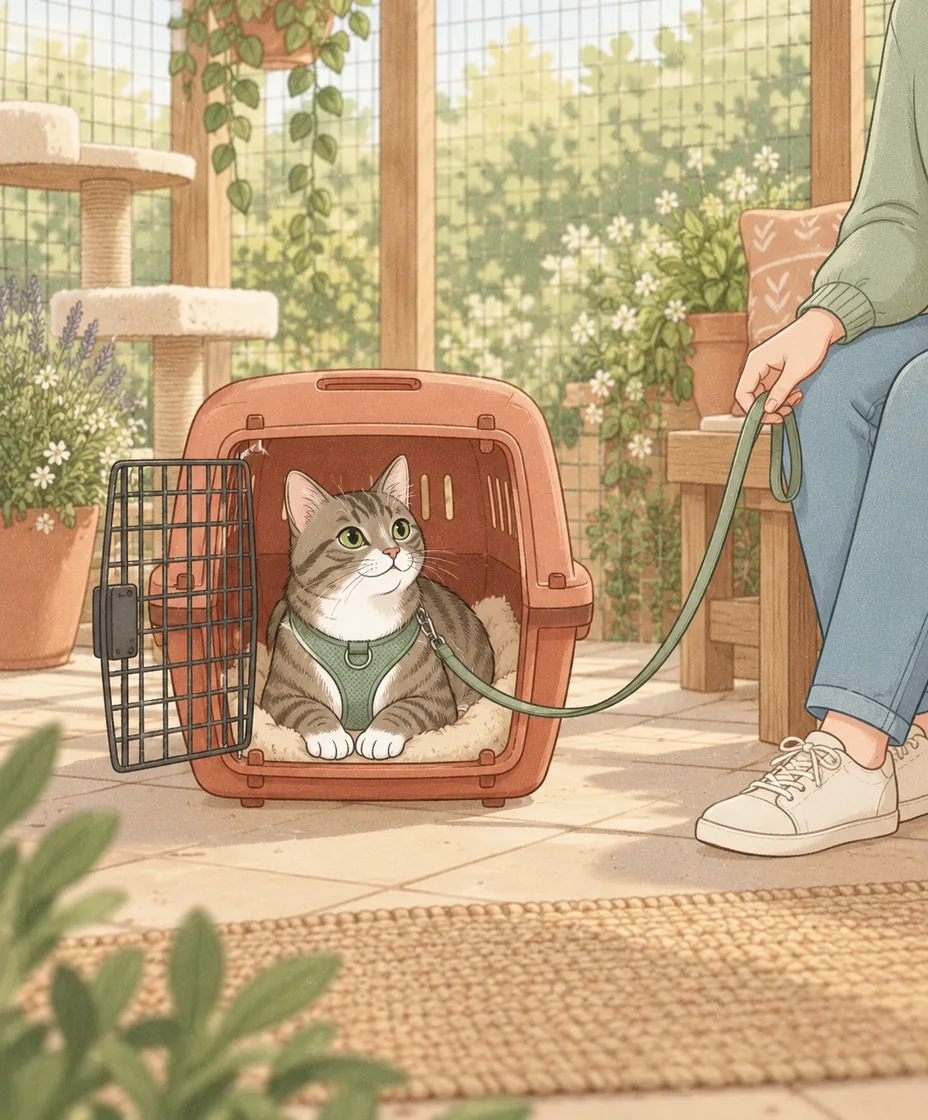
If your cat becomes frightened outside on a harness, end the outing safely rather than pulling them forward or waiting for them to give in. Comfortable movement indoors does not establish comfort outdoors. Before trying again, reconsider the location, nearby activity and available retreat. Outdoor walks are optional; staying inside with suitable activities may be the better choice.
The harness may be familiar; the setting is not
A cat might walk comfortably through the living room yet stay at the back of a carrier outside. Another might explore during one quiet outing and withdraw at a different time. Those are different situations, even when the equipment is unchanged.
PDSA warns that unfamiliar places, traffic, other animals and restricted escape can make walks stressful. It does not recommend lead walking as a routine activity for cats. Its precautions for people who choose to try include indoor preparation, avoiding busy areas and allowing the cat to set the pace.
If your cat already struggles when the harness goes on indoors, return to the harness introduction itself. This guide addresses the next decision: whether a particular outdoor setting is comfortable enough to offer again.
Source: PDSA: Walking a cat on a lead — is it a good idea? (October 24, 2024)
If daylight outings are harder, compare what changed
Do not assume that a preference for one time of day means the cat needs more exposure at another. Look at the setting without taking the cat along: are more people passing, dogs using the area, delivery vehicles stopping or nearby machines running? Is the proposed resting place exposed? These are possibilities to check, not a diagnosis of why your cat is worried.
Keep a short outing note. The example below is invented to show useful observations; it is not a training result. Record what happened before withdrawal, rather than labeling the whole trip a failure.
| Record | Example |
|---|---|
| Setting | Same enclosed patio, different time of day. |
| Activity nearby | People passed beyond the mesh; a delivery stopped nearby. |
| Cat’s response | Moved to the back of the carrier as voices approached. |
| What you did | Ended the outing and returned indoors. |
| Next decision | Check for a genuinely quieter setting, or pause outings. Do not repeat the same setup for longer. |
Staying still is not enough to call it comfortable
Look at posture, movement and the choices your cat makes together. The RSPCA describes a tense crouch, a tightly tucked tail and hiding as signs of worry. A loose posture and ordinary movement are more encouraging, but one sign alone cannot tell you everything.
Do not use a treat as a test the cat must pass before being allowed to leave. Eating a reward, completing a familiar cue or remaining quiet does not cancel out withdrawal. If the cat retreats, freezes tensely or repeatedly tries to get away, end the outing. There is no requirement to take one more step first.
Decide whether another outing is worthwhile
First decide whether another outdoor attempt is worthwhile for this cat. Cats Protection advises bringing a cat home when they appear uncomfortable and keeping any chosen outing close to familiar territory. It also warns that a harness can slip or a lead can be dropped. Equipment and learned cues do not remove those risks.
If you choose to try again, use this preparation list. It adapts the familiar-carrier and voluntary-exploration ideas in Pounce’s Backyard Adventures curriculum; it is not a tested treatment for outdoor fear.
Source: Cats Protection: Should I walk my cat on a harness and lead? (January 11, 2024)
Prepare before offering another outing
- Check the plan with your veterinarian, including health, vaccination, parasite prevention and identification. Assess local hazards before the cat comes outside.
- Choose a quiet, controlled space close to home. A suitably secured catio is different from a garden with an ordinary fence, which a cat may climb. If you cannot prevent unwanted encounters or provide a safe return, keep the session indoors.
- Use a familiar carrier for the journey, properly assembled and securely closed during transport. Practice comfortable carrier use separately before relying on it during an outing.
- Only offer the open carrier as a retreat within the prepared secure setting, with the familiar, correctly fitted harness attached to a lead you continue to hold. Keep the lead loose and clear of the carrier door and other snag points. Never tether the cat or leave them unattended.
- Let the cat remain inside the carrier. Do not tip them out, reach in to extract them or lay a trail of food that draws them beyond where they choose to go. If they withdraw or look worried, close up safely and return indoors.
- End while the arrangement is still easy to manage. Secure the carrier before carrying it home. Record comfort and recovery afterward, rather than distance walked or minutes endured.
Use the cat’s response to decide whether to repeat the setting. Completing the list does not establish that an outing will suit them.
There is no deadline to become an outdoor cat
A daytime walk is not a necessary graduation goal. You can choose indoor play, food puzzles and comfortable places to climb, scratch and hide. A catio may suit some cats, but access should still be voluntary and the enclosure needs to be safe. Do not replace a difficult daytime outing with night walks simply because darkness seems easier; night-time access brings separate hazards.
If fear recurs, pause outings and ask your veterinarian about a qualified behavior professional. Sudden changes, reduced eating, unusual hiding or altered toileting also deserve veterinary advice. PDSA notes that apparent stress signs can have medical causes; an outdoor training plan cannot distinguish them.
We make Pounce. Its Harness Acceptance, Leash Indoors and Backyard Adventures modules cover preparation and staged practice. This article adds an outing decision and observation plan, not a promise that every cat should progress outdoors. Sources and curriculum checked October 16, 2026. Prepared with AI assistance; not individually reviewed by a veterinarian.
A little guidance goes a long way.
Follow illustrated lessons, take the next small step, and keep track of your cat’s little wins in Pounce.
Explore Pounce for iOSSources & how this guide was written
Pounce’s Harness Acceptance, Leash Indoors and Backyard Adventures lessons informed the preparation and retreat guidance. The outing log is an original planning example, not evidence of a tested treatment.
- PDSA: Walking a cat on a lead — is it a good idea? (October 24, 2024)
- Cats Protection: Should I walk my cat on a harness and lead? (January 11, 2024)
- RSPCA: Understanding your cat’s behaviour
- Cats Protection: Keeping cats safe outside
- PDSA: Recognising stress in cats
Sources checked October 16, 2026. This article is educational and has not been individually reviewed by a veterinarian. Our editorial policy explains our approach.