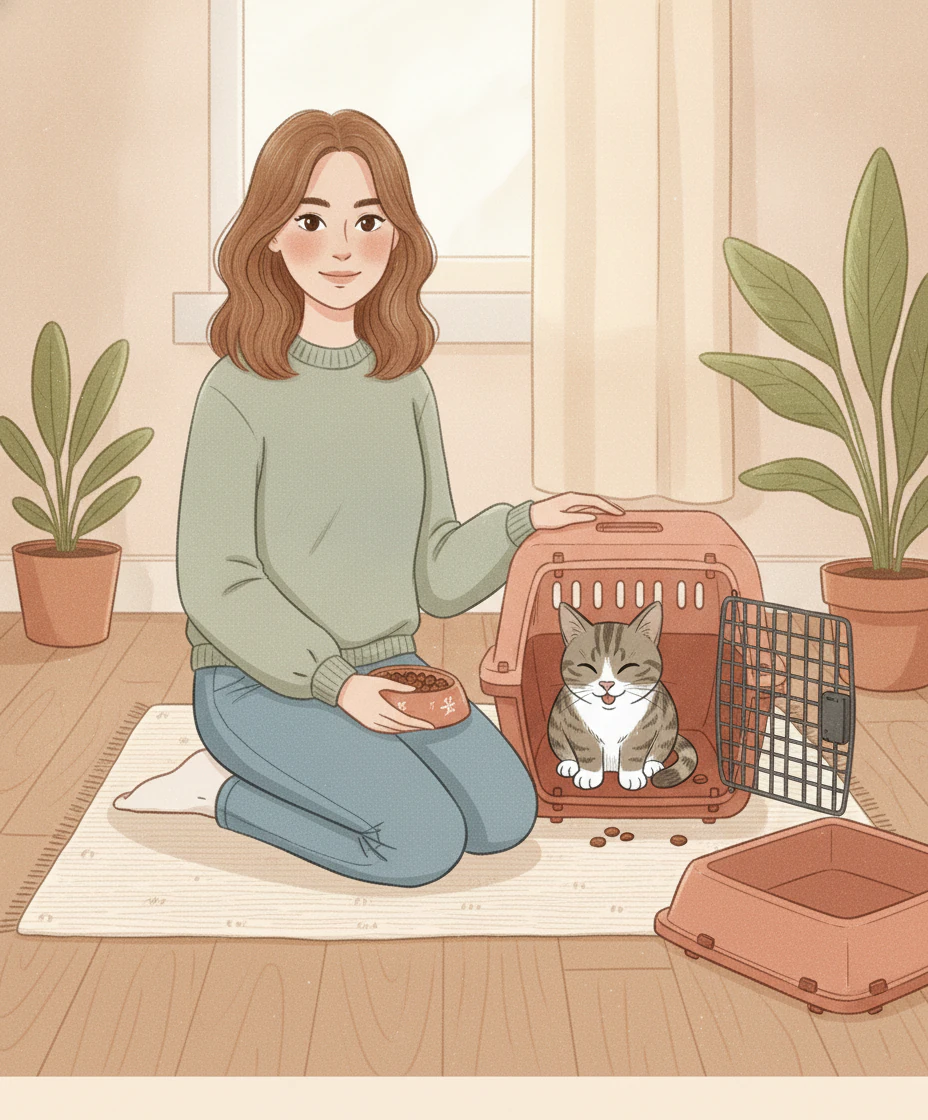
Start cat carrier training by leaving the carrier open in a quiet, familiar place with comfortable bedding. Reward your cat for approaching and entering voluntarily. Introduce enclosure, a moving door, and being carried as separate, gradual steps. Keep practice at home gentle and let your cat leave; do not wait until a vet appointment to begin.
Let the carrier become ordinary furniture
A carrier that only appears before travel has a very specific meaning. International Cat Care recommends keeping it in a part of the home your cat enjoys, with familiar bedding and positive experiences. A sturdy carrier with a removable top can also make access easier.
Pounce’s Carrier Confidence sequence starts smaller still: with the open base, if your carrier safely comes apart. Put it somewhere stable and quiet, away from busy doorways. The first invitation is simply to investigate. Leave room around it so your cat can approach and move away freely.
Reward the approach your cat can manage today
Offer a reward at a distance your cat is comfortable with. That might be beside the base rather than inside it. If they move closer, mark and reward the choice. A glance, a sniff, or one paw can be the whole useful step for that day.
Gradually place rewards farther into the open base as your cat becomes comfortable. You can offer ordinary meals nearby and move them closer over time, provided your cat continues eating comfortably. Never make entering the carrier the only way a hesitant cat can get food.
Notice the difference between a cat that enters and stays loose and relaxed, and one that stretches forward with their back feet planted outside. Both give you information. The second cat may need an easier setup before the next step.
Change one part of the carrier at a time
- Practice comfortable approaches and voluntary entry with the open base.
- When that is familiar, attach the roof while keeping the doorway fully open. Return to easy rewards for approaching and entering.
- Introduce small door movements in separate sessions. Start with a tiny movement and reopen immediately, while your cat stays comfortable.
- Build very brief closure only after the earlier steps are relaxed. At home, if your cat tries to leave or becomes distressed, end the attempt and return to an easier stage.
- Practice tiny, steady lifts only after enclosure is comfortable. Put the carrier down gently and keep the next movement small.
This is the progression used in Pounce’s carrier curriculum, not a one-day checklist. You may spend many sessions at one stage. A new roof, a click of the latch, or a few seconds of motion are each a new experience. Avoid adding them all at once.
Record comfort as well as the action
A useful training note might say: “walked into the open base, ate a treat, then left calmly.” Another might say: “hesitated when I touched the door.” These observations tell you what to repeat and what to make easier. “Stayed inside for longer” is not automatically progress if your cat was worried throughout.
Keep the carrier available between sessions. Quietly choosing it as a resting place is valuable, even when nobody is running a formal lesson. You do not need to interrupt every relaxed visit with a training task.
Practice and real travel have different boundaries
At home, an available exit helps your cat participate voluntarily. During transport, the carrier must be properly assembled and securely closed. International Cat Care advises supporting it underneath to reduce movement and keeping it closed during travel, even if the cat vocalizes.
Do not postpone necessary veterinary care while waiting to finish a training plan. Tell your veterinary team if your cat is frightened of the carrier or travel; they can help you plan for the appointment. Persistent distress, signs of pain, or travel sickness need individual veterinary advice.
A good first goal: an unhurried visit
For today, let success be a small choice your cat can repeat comfortably. Leave the carrier open, set up one easy reward, and observe. If they investigate and then walk away, you have a starting point.
Pounce’s Calmer Care lessons continue the same approach into brushing, handling, and other everyday care. If a marker is new to you, our clicker guide explains the basic reward sequence before you add a practical task.
A little guidance goes a long way.
Follow illustrated lessons, take the next small step, and keep track of your cat’s little wins in Pounce.
Explore Pounce for iOSSources & how this guide was written
Pounce curriculum: Carrier Confidence. This article adapts the base, roof, door, and movement progression, with a separate distinction between home practice and secure transport.
Sources checked September 12, 2026. This article is educational and has not been individually reviewed by a veterinarian. Our editorial policy explains our approach.