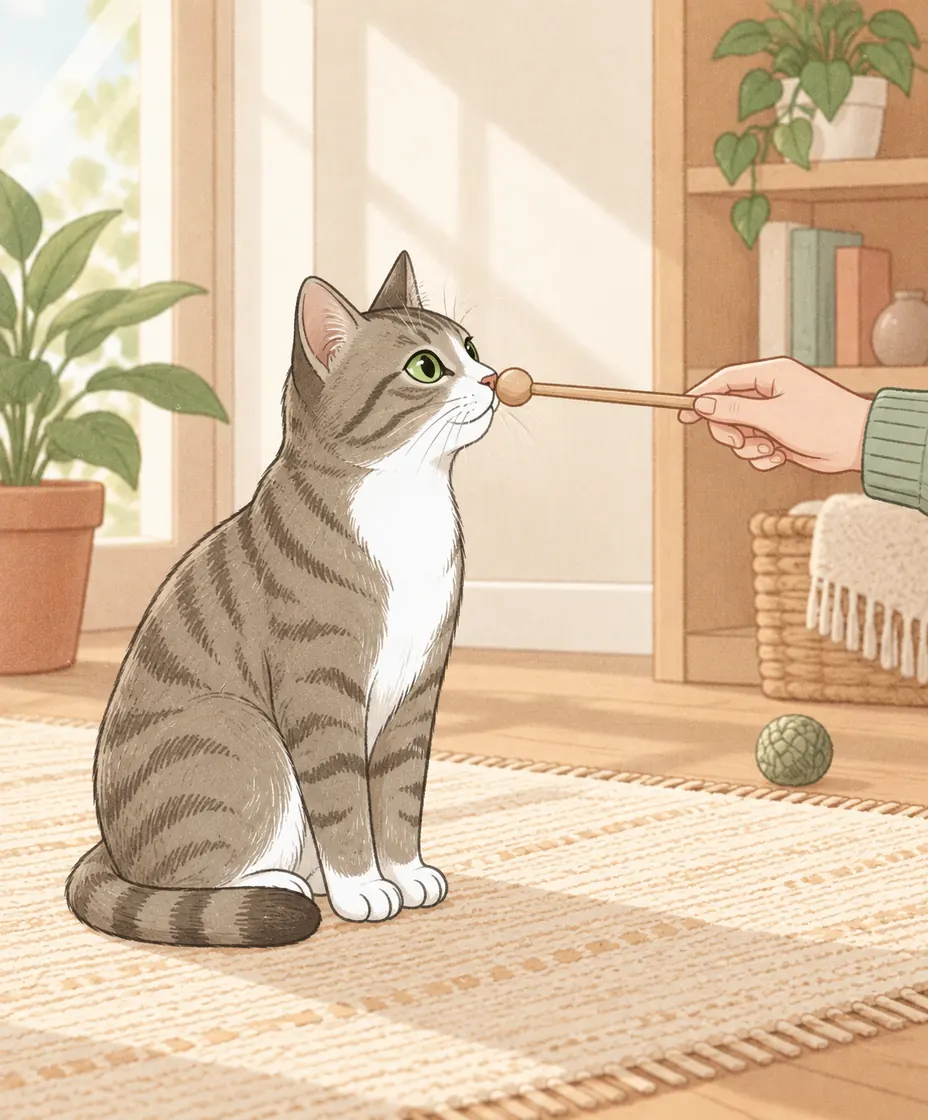
To teach a cat to touch a target, hold a safe, blunt object close enough for a comfortable sniff. Mark a voluntary nose touch and give a reward. Start with contact in place, then add a small step toward the target. Move the target away between attempts so each invitation is clear.
A nose touch gives you a useful next step
Once your cat recognizes a click or a quiet “yes” as a reward marker, you need an action to mark. A nose touch is a small, visible event: either the nose briefly meets the target or it does not. That makes it a practical exercise in your own timing as well as a new skill for your cat.
Humane Society Silicon Valley includes target training in its feline training guide and describes its use for guiding movement. This Pounce lesson starts with a nose target; paw targets are a different exercise. You do not need to teach both together.
Make the first invitation easy
Use a smooth, blunt target that cannot splinter, or a still finger if your cat is comfortable around hands. Choose a quiet spot with room to leave. Keep tiny, suitable food rewards ready in your other hand, separate from the target. If reaching toward a hand brings biting or swatting, pause and work on a safer setup before teaching this skill.
Pounce’s Target Touch progression follows its clicker foundation. If the marker is still unfamiliar, return to pairing the sound with a reward first. Practice only while your cat is relaxed and interested; there is no required number of nose touches to finish.
Catch the contact, then reset
- Present the target near nose level without putting it against your cat’s face. Let your cat decide whether to investigate.
- At a voluntary nose touch, use the familiar marker once and give the reward. Remove the target for a brief reset.
- Offer the same easy invitation again. Avoid moving the target around while your cat is trying to reach it.
- Finish while the interaction still feels comfortable. Walking away is a reason to stop, not a cue to follow your cat with the target.
For example, your cat looks at the target, leans forward, and briefly touches it before rubbing a cheek along it. Mark the nose contact, rather than waiting until the cheek rub is over. Your hand can stay quiet while you deliver the reward with the other hand.
Change distance before adding anything else
When your cat deliberately meets a nearby target, place it just far enough away to invite one small step. Mark the touch after that step. Keep the surface, your position, and the reward familiar so distance is the only new challenge.
A useful note might read: “Touched beside the front paws three times; watched without moving when I offered it farther away.” Next time, begin at the easy distance and make a smaller change. Do not add a verbal cue, extra distance, and a new room in the same attempt.
If you get a paw, a stare, or a retreat
A paw reaching for your reward hand can mean the food is the most obvious part of the setup. Keep that hand quiet and farther from the target between deliveries. If you accidentally mark a paw movement, still deliver the promised reward, then reset your own timing.
If your cat only looks, present the target a little closer without touching them. If your cat retreats or becomes tense, remove it and stop. Do not use the target to draw a reluctant cat into an experience they cannot leave. A learned nose touch is an invitation to move, not permission to close a carrier door or begin handling.
A little guidance goes a long way.
Follow illustrated lessons, take the next small step, and keep track of your cat’s little wins in Pounce.
Explore Pounce for iOSSources & how this guide was written
Pounce curriculum: Clicker Charging and Target Touch. The nose-contact timing example and one-variable progression are original teaching examples adapted from the app’s sequence.
Sources checked September 12, 2026. This article is educational and has not been individually reviewed by a veterinarian. Our editorial policy explains our approach.