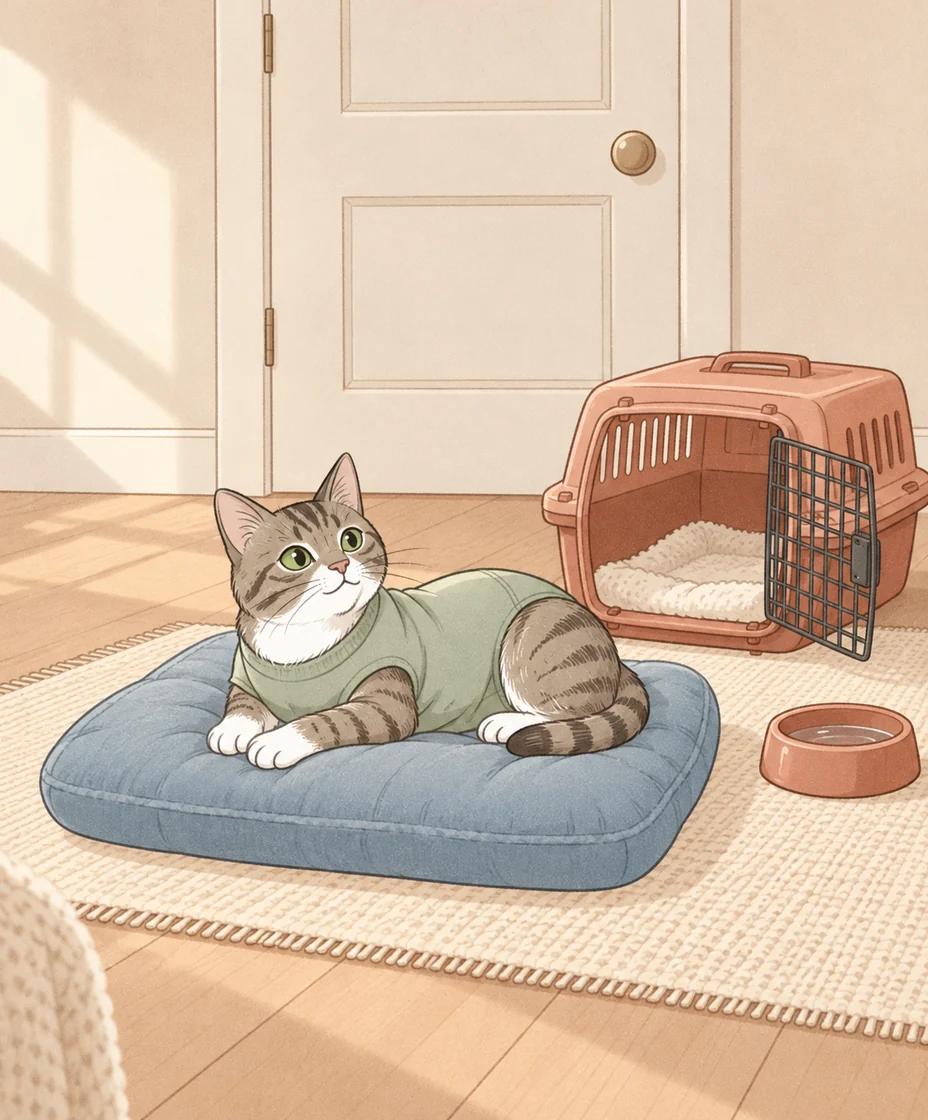
If your cats hiss or threaten each other after a vet visit, give them separate, comfortable spaces rather than forcing a reunion. A returning cat may smell or look different, and illness or discomfort can also affect behavior. Follow the clinic’s recovery instructions and rebuild contact gradually. A familiar relationship does not make an immediate meeting necessary.
A different smell is one possibility, not a diagnosis
FelineVMA explains that veterinary smells and changes such as a collar or bandage can unsettle housemates. Its guidance also links intercat tension with changes in health. You cannot establish the cause simply by watching one cat hiss at another.
Tell the clinic about a sudden change between cats who previously got along. Mention the procedure or visit, when the reaction began, and whether either cat seems unwell. Advice about scent should not replace an assessment of pain or recovery.
Source: FelineVMA: Intercat Tension (page dated July 15, 2026)
Prepare the arrival before opening the carrier
For a homecoming where tension is a concern, settle the resident cat elsewhere first. Bring the returning cat into a quiet, secure room, close the room door, then open the carrier as the clinic has advised. Provide their own water, food, litter and resting place, arranged to suit any recovery restrictions. FelineVMA recommends a separate resting space, particularly after anesthesia.
A useful household detail is deciding who handles each door. If one person is unloading the car while another opens the recovery room, a good plan can disappear in seconds. Put supplies inside beforehand and tell everyone which cat is where.
Source: FelineVMA: Visiting Your Veterinarian (2024 brochure)
Keep prescribed protection in place
Do not remove a prescribed cone or recovery suit to make a cat look familiar. VCA’s surgical guidance explains that protection prevents licking and damage to an incision. Ask the treating clinic about fit or alternatives if the equipment causes difficulties.
Follow that clinic’s activity restrictions even if both cats want to play. After surgery, bathing and putting products on an incision can also interfere with care; do neither without veterinary direction. A bath, fragrance or improvised scent treatment is not a safe shortcut to a reunion.
Call the clinic about worsening recovery, wound concerns or changes in eating, movement or comfort. Use its discharge instructions and emergency contact route rather than waiting for the social problem to resolve.
Source: VCA: Surgical Discharge Instructions for Cats (updated October 3, 2025)
Write a homecoming note everyone can use
Keep medical instructions and observations about the cats in separate columns. This prevents a calm moment from being mistaken for permission to end recovery restrictions. The following is a planning worksheet, not a clinical recovery schedule.
| Write down | Make it specific |
|---|---|
| Clinic instructions | Copy the prescribed restrictions, protection and contact number from the discharge sheet. Record questions for the clinic rather than guessing. |
| Arrival route | Name the room, the person bringing in the carrier and the person keeping other cats away from that route. |
| Everyday access | Check that each cat can reach their own food, water, litter and resting space while the door stays closed. |
| What happened | Note the time, whether there was sight or only sound/scent, the reaction of each cat and what happened afterward. |
| Next decision | Record the clinic’s advice and the next comfortable introduction stage separately. Neither cancels the other. |
Rebuild contact without a countdown
There is no dependable number of hours after which every pair should meet again. FelineVMA advises working with scent before direct contact and using a fuller reintroduction process if tension persists. Familiar bedding can offer scent without requiring a face-to-face meeting; do not press it onto an unwilling or recovering cat.
Use our introduction guide to choose the stage both cats can manage. Do not move forward because a certain day has arrived, and do not use a loose barrier that can fall during a rush. Recovery restrictions may rule out room swaps, climbing or shared play even when those appear in a general introduction plan.
If a meeting produces hard staring, growling, stalking or a rush toward the other cat, end access and return to secure separation. Never reach between fighting cats. Ask your veterinarian for help if tension continues, either cat cannot use their normal resources, or a fight causes injury.
Source: FelineVMA: Decrease Tension After a Veterinary Visit (July 16, 2024)
Plan the return as well as the trip
Before the next appointment, tell the practice what happened at the last homecoming and ask how to arrange the return. Save your household note with the carrier checklist so it is ready before you leave.
We make Pounce. Its Carrier Confidence and Multi-Cat Introductions lessons support preparation and gradual practice; they do not diagnose aggression or prescribe postoperative care. This article adds the homecoming handoff worksheet. Sources and curriculum checked October 11, 2026. Prepared with AI assistance; not individually reviewed by a veterinarian.
A little guidance goes a long way.
Follow illustrated lessons, take the next small step, and keep track of your cat’s little wins in Pounce.
Explore Pounce for iOSSources & how this guide was written
Carrier Confidence and Multi-Cat Introductions in content/modules.json checked. Only preparation and staged-practice product facts used. General introduction timelines, room swaps, high perches and shared play do not override discharge instructions. Original household handoff worksheet; no treatment or app efficacy claims.
- FelineVMA: Intercat Tension (page dated July 15, 2026)
- FelineVMA: Decrease Tension After a Veterinary Visit (July 16, 2024)
- FelineVMA: Visiting Your Veterinarian (2024 brochure)
- VCA: Surgical Discharge Instructions for Cats (updated October 3, 2025)
Sources checked October 11, 2026. This article is educational and has not been individually reviewed by a veterinarian. Our editorial policy explains our approach.