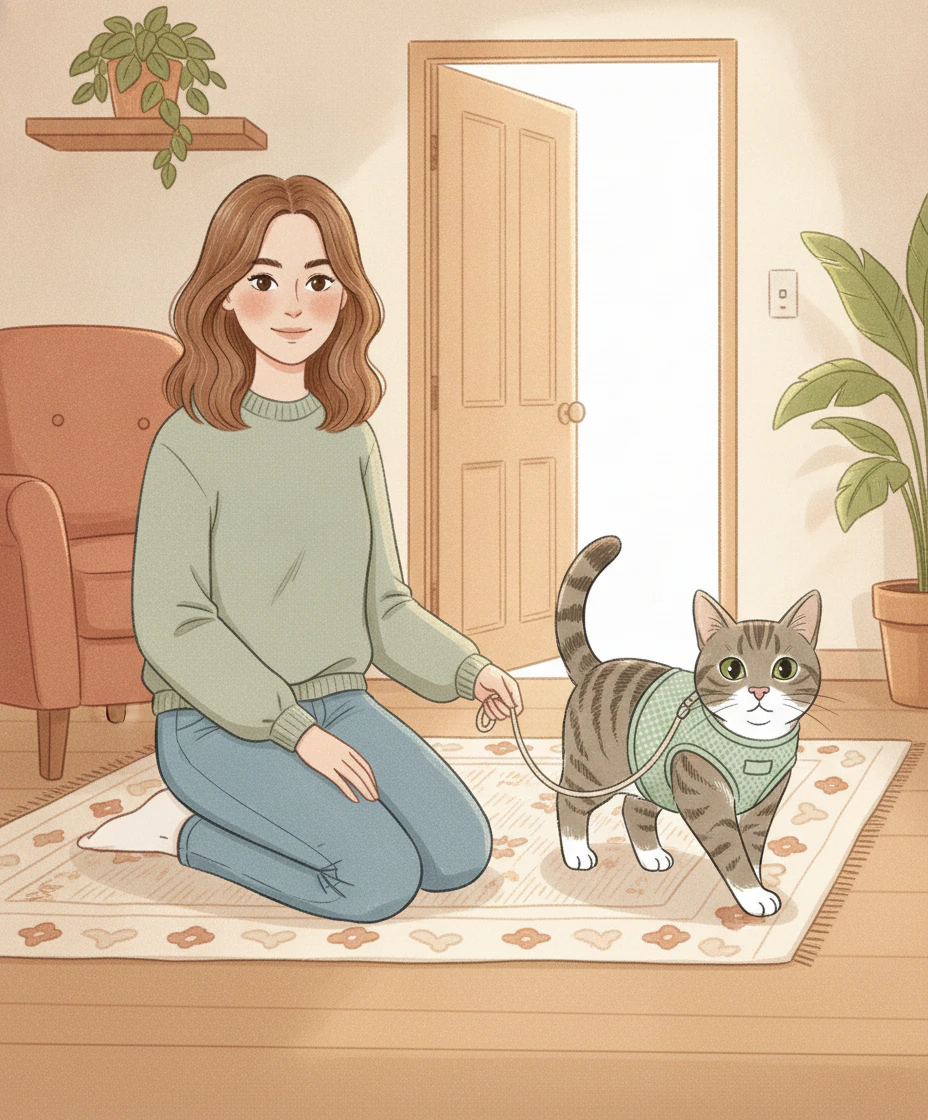
Introduce a cat harness indoors before attaching a leash or going outside. Begin with the harness nearby, then brief comfortable contact, and only later short periods of wearing it. Let your cat withdraw at every stage. Freezing, struggling, or trying to escape means pause and reassess, not pull them into a walk.
An outdoor walk is an option
Cats Protection notes that many cats find restraint stressful and recommends gradual introduction if a harness is used. Some cats will be better served by indoor play and enrichment. The useful question is whether your individual cat is comfortable with the experience, not whether other cats seem to enjoy it online.
Pounce’s adventure path begins with Harness Acceptance before indoor leash work. You can use that first stage simply to find out how your cat responds. Completing a program or taking a photograph outside is not a reason to continue through distress.
Prepare the equipment before involving your cat
Choose a harness designed for cats and follow that model’s fit and fastening instructions. Inspect the straps and closures, and learn how to remove it quickly before practicing. A collar attachment is not a substitute for a suitable harness. Do not assume any harness is escape-proof.
Practice in a familiar room with secure exits and no tangle hazards. Have suitable rewards ready and leave your cat a route away from the equipment. Introduce fastening sounds at a comfortable distance if they are unfamiliar; avoid surprising your cat with a buckle beside an ear.
Separate seeing, touching, and wearing
- Place the harness nearby while your cat can choose whether to approach. Reward calm voluntary investigation without moving the harness toward them.
- Once its presence is comfortable, introduce a moment of gentle contact near the shoulder, then remove it. Reward while the experience remains easy.
- Practice the next small part of your harness’s fitting process separately. Do not go from one brief touch straight to full fastening and a leash.
- When brief wearing is comfortable, invite a little ordinary movement indoors. Keep the first wearing session short and remove the harness before extending the challenge.
Move through these invitations across as many short sessions as your cat needs. You may stop at any stage. If your cat has a history of fear or handling difficulty, get individualized help before trying to put equipment on.
Stillness is not enough evidence of comfort
A cat who stands motionless may be worried rather than calmly accepting the harness. Look for comfortable movement and voluntary participation. If your cat freezes, flops, struggles, backs away, or tries to escape, stop the exercise and remove the harness calmly when safe. Check fit and return to an easier introduction another time.
Do not drag your cat forward, leave the harness on until they “get used to it,” or keep offering food to push past an obvious attempt to withdraw. A reward is useful for an experience your cat can manage; it does not make every experience appropriate.
A leash adds another new experience
Only consider indoor leash practice after the harness itself is comfortable. Supervise throughout and prevent the leash catching on furniture. Let it remain loose; your first task is learning to move together, not steering your cat by tension. Pounce treats this as a separate program for a reason.
Before outdoor practice, discuss health protection, identification, and local risks with your veterinary team. Plan secure transport and a quiet environment with a way to retreat. Being comfortable inside does not establish comfort outside. A carrier can be part of your transport plan, but it needs its own gradual introduction.
A little guidance goes a long way.
Follow illustrated lessons, take the next small step, and keep track of your cat’s little wins in Pounce.
Explore Pounce for iOSSources & how this guide was written
Pounce curriculum: Harness Acceptance and Leash Indoors. This guide separates equipment stages and adds a comfort checkpoint. It does not assume freezing or flopping is harmless, and does not promise every cat will enjoy a harness.
Sources checked September 12, 2026. This article is educational and has not been individually reviewed by a veterinarian. Our editorial policy explains our approach.