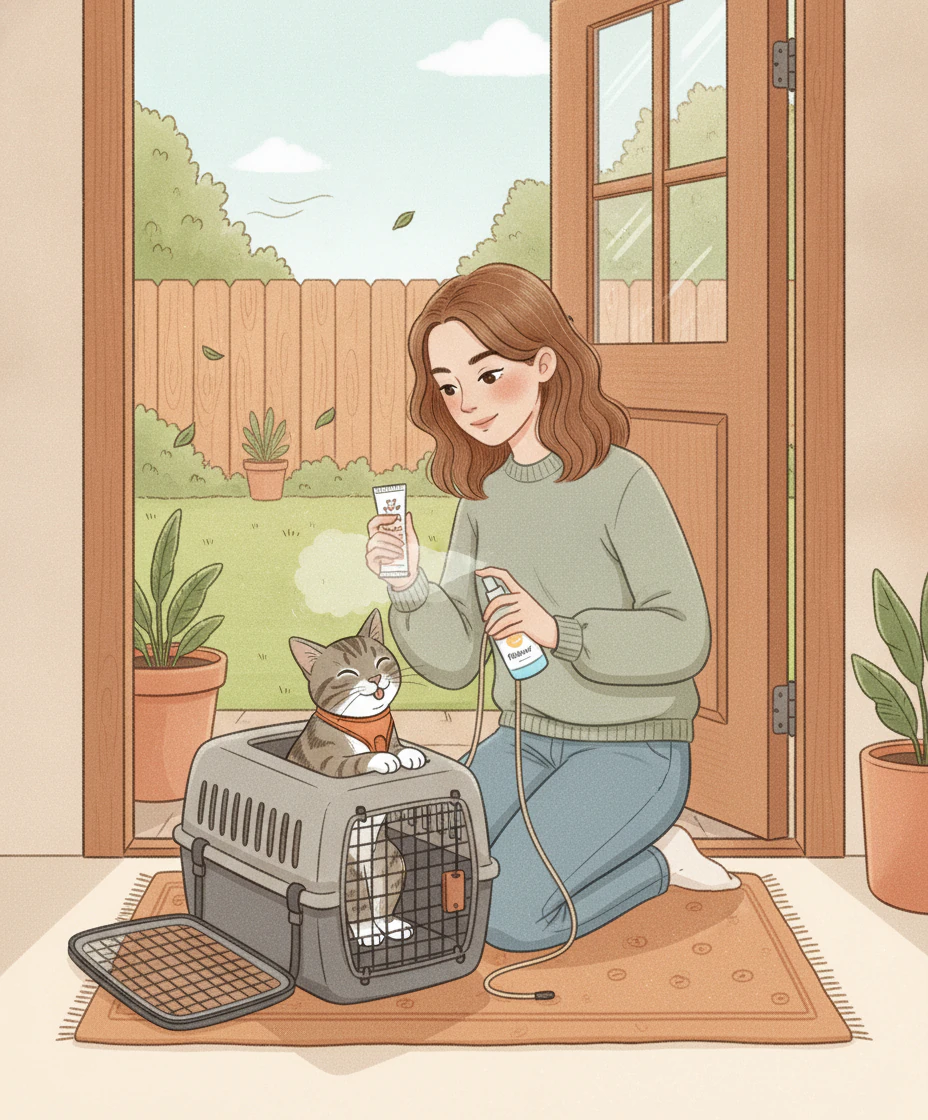
Walk a cat outside only once they walk calmly on a harness and leash indoors. Carry them out, start in a quiet fenced yard with an open carrier as a safe base, and let them choose to step out. Keep first outings to a few minutes, build to about 10 relaxed minutes, then try a quiet sidewalk. Yard to full block usually takes two to three months.
Should I walk my indoor cat outside?
Be honest with yourself here first, because the two biggest UK cat charities say most cats should not be walked. Cats Protection and PDSA both list the same reasons: cats dislike restraint, like to choose where they go, feel unsafe away from their territory, and can be alarmed by dogs, traffic and loud noise. A dropped lead near a road is the worst case.
Some cats do enjoy it. The San Francisco SPCA says most cats can be leash trained, kittens most readily, and older cats with patience. The cats who take to walks are usually curious at the window, relaxed in a harness indoors, and keen to sniff new things. RSPCA Queensland adds that some cats will be happy never getting further than the backyard, and that is a perfectly good finish line.
Walks are a poor fit for a fearful cat. The SF SPCA says so plainly. If your cat hides from visitors, startles at the doorbell or panics in the harness, put the energy into play and food puzzles indoors instead.
Source: Cats Protection: Should I walk my cat on a harness and lead? (January 11, 2024)
What you need before the first walk
A cat who already walks on a leash indoors. That is the real prerequisite: wearing the harness for 10 relaxed minutes, following a light leash and yielding when it tightens. If you are not there yet, start with harness training, because a first outdoor trip is the wrong place to meet the harness.
A cat harness, never a collar. Cats Protection warns that a collar can slip off and that pulling on one could choke your cat. The SF SPCA fit test is two fingers between harness and body, with the leash clipped to the back. Pounce’s Backyard Adventures lesson uses a 6-foot fixed leash rather than a retractable one, an open carrier you bring outside as a safe base, and a large towel within reach to scoop up a frightened cat.
Health and ID. Before any outdoor time, the SF SPCA asks for up-to-date vaccinations and a microchip, and Dr Wailani Sung, writing for Vetstreet, adds parasite prevention. Put a collar with a readable ID tag on as well. A cat who comes when called is safer still if something goes wrong.
How to walk a cat outside: 7 steps
- Sit in the open doorway. Harness and leash on, carry your cat to the open back door and keep their paws off the ground. Hold them, or let them sit in the open carrier on the threshold, licking a squeeze treat while the breeze drifts in. Aim for about 60 seconds the first few days, then 90. Success is whiskers forward and soft eyes.
- Put the carrier on the grass. Carry your cat out in the carrier to a quiet, shady corner of the yard, set it down and open the door. Sit about 2 feet away with the leash looped on your wrist and let them watch from inside for 3 minutes, then 4, and let them come out only in their own time. Calmly looking out of the doorway is the win.
- Wait for the first step out. Same setup, leash trailing with no tension. When your cat chooses to step onto the grass, sniff and come back in, mark it and give a handful of treats inside the carrier. In the Pounce plan this usually lands in the second week. Each return to the carrier counts as a success: it means they trust the exit.
- Follow, don’t lead. Once your cat steps out on their own, follow slowly within about 6 feet of the carrier, keeping the leash slack. Let them sniff, sit and watch. Build to 10 relaxed minutes of cat-led exploring, around week four. A level or raised tail and slow, deliberate sniffing mean they are enjoying it.
- Watch the street from the porch. Before any sidewalk, sit on the porch or at the top of the driveway with your cat in an open backpack or carrier, treats flowing as cars and neighbors pass. Three minutes, then 5. Head back inside at wide pupils, fast-swiveling ears or ducking deep into the pack.
- Teach a dive-in cue. Set the open pack on the sidewalk in front of your house and let your cat sniff the driveway and grass for 2 to 5 minutes. Then teach a word like “Pack”: about 20 feet from home, when something mild appears, such as a person 50 feet away, tap the pack opening, say the word, and pay generously the instant your cat hops in. Practice it often.
- Add distance a little at a time. Walk half a block (about 7 minutes), then a full block (about 10), then a quiet loop of around 15 minutes, with your cat walking the interesting stretches and riding in the pack through the busy ones. End every walk while they still want more.
Each step is repeated over several short sessions until it looks easy. The durations below come from Pounce’s Backyard Adventures and Neighborhood Walks lessons. Treat them as a guide, not a deadline: move on when your cat is relaxed, and go back a step when they are not.
Source: RSPCA Queensland: Harness training your cat (December 1, 2020)
How long should you walk a cat outside?
Short. Cats Protection suggests keeping walks to five to 10 minutes, at least to begin with, and Vetstreet’s Dr Sung starts with walks of a few minutes in a deck, patio or yard. Even a cat who walks well rarely needs more than the 15-minute loop in step seven; Pounce’s Neighborhood Walks lesson treats 15 calm minutes as the finished skill.
The whole journey takes longer than people expect. Pounce’s timeline is three to five weeks for the yard and another four to six for neighborhood walks, so two to three months from the back door to a relaxed block. The SF SPCA also suggests a regular walking schedule, which helps your cat know what to expect.
Expect a cat-style walk: cats explore and pause rather than heel, so you go where they go and steer only for safety. Offer the litter box before you head out, too. Cats Protection notes that cats won’t learn to toilet on a lead.
Source: Cats Protection: Should I walk my cat on a harness and lead? (January 11, 2024)
Where should you walk a cat, and what if a dog comes?
Your own garden is the best place, according to Cats Protection; the SF SPCA’s advice is to start somewhere quiet and sheltered and simply sit with your cat on the leash. When you go further, Cats Protection and PDSA both say to avoid busy areas, roads and anywhere dogs or other cats are likely. Dr Sung suggests that if you want a park, choose a small, quiet one where you can see every dog, visit it alone first, and skip big parks and trails.
Dogs are the main hazard. Dr Sung notes that most dogs get very excited at the sight of a cat, and some will act aggressively. This is where the pack cue from step six earns its keep. If a loose dog or a loud truck is actually coming, don’t wait for the cue: scoop your cat into the pack and walk away.
People are the other one. Friendly strangers want to bend down and pet, and a tall unfamiliar person leaning over reads as a threat to a cat. Step in politely, let your cat watch from about 6 feet away, and reward calm watching. Never tie the leash to anything or leave your cat outside alone, on a leash or not, the SF SPCA adds.
What if my cat freezes or wants to go home?
Freezing and hunkering down on the first few trips is common, Dr Sung writes, and it does not mean the plan has failed. Give your cat time in the carrier doorway, offer a lick of a squeeze treat, and let them decide. A cat who walks straight back into the carrier has made a good decision, so close up, carry them in and try a shorter visit another day.
Watch the body, not the clock. Going well: whiskers forward, soft eyes, ears turning smoothly, a level tail and slow sniffing. Time to go in: a tense crouch, tucked tail, wide pupils, a low growl or clawing backward toward the door. Retreating on a calm note always beats pushing for one more minute.
If fear keeps coming back after several shorter visits, the outdoors may not suit your cat right now, and that is fine. Our guide to a cat scared outside on a harness covers what to change, or whether to stop.
When to call your vet
Before the first outdoor session, ask your vet which vaccinations and flea, tick and worm prevention your cat needs for your area, and check the microchip details are current. PDSA notes that microchipping has been a legal requirement for cats in England since June 10, 2024.
Stop walks and talk to your vet if your cat pants with an open mouth, bolts blindly, freezes flat, yowls at ordinary neighborhood sounds, or climbs you or a fence in panic. Pounce’s lessons treat that as fear that needs a slower plan: your vet can rule out pain or a sensory problem and refer you to a qualified behaviorist. Also book a check if your cat comes home limping, scratching more, or with a tick or wound.
Source: PDSA: Walking a cat on a lead – is it a good idea? (October 24, 2024)
Walking your cat with Pounce
Pounce breaks this into guided daily sessions, each with an illustration, a goal and what to watch for. Backyard Adventures starts with a vet check and the open doorway and ends with 10 relaxed minutes in the yard. Neighborhood Walks picks up from the porch, teaches the backpack cue, and builds to a 15-minute loop. Harness Acceptance, Leash Indoors and Come When Called come first, and Defensive Pick-Up adds an emergency scoop for trails.
A little guidance goes a long way.
Follow illustrated lessons, take the next small step, and keep track of your cat’s little wins in Pounce.
Explore Pounce for iOSSources & how this guide was written
Pounce curriculum: Backyard Adventures and Neighborhood Walks, with Harness Acceptance, Leash Indoors and Come When Called as foundations and Defensive Pick-Up as the next step.
- Cats Protection: Should I walk my cat on a harness and lead? (January 11, 2024)
- PDSA: Walking a cat on a lead – is it a good idea? (October 24, 2024)
- San Francisco SPCA: Leash training (cats)
- Vetstreet, Dr Wailani Sung: Want to walk your cat on a leash? Here’s how and where to take a stroll (February 10, 2016)
- RSPCA Queensland: Harness training your cat (December 1, 2020)
Sources checked October 30, 2026. This article is educational and has not been individually reviewed by a veterinarian. Our editorial policy explains our approach.