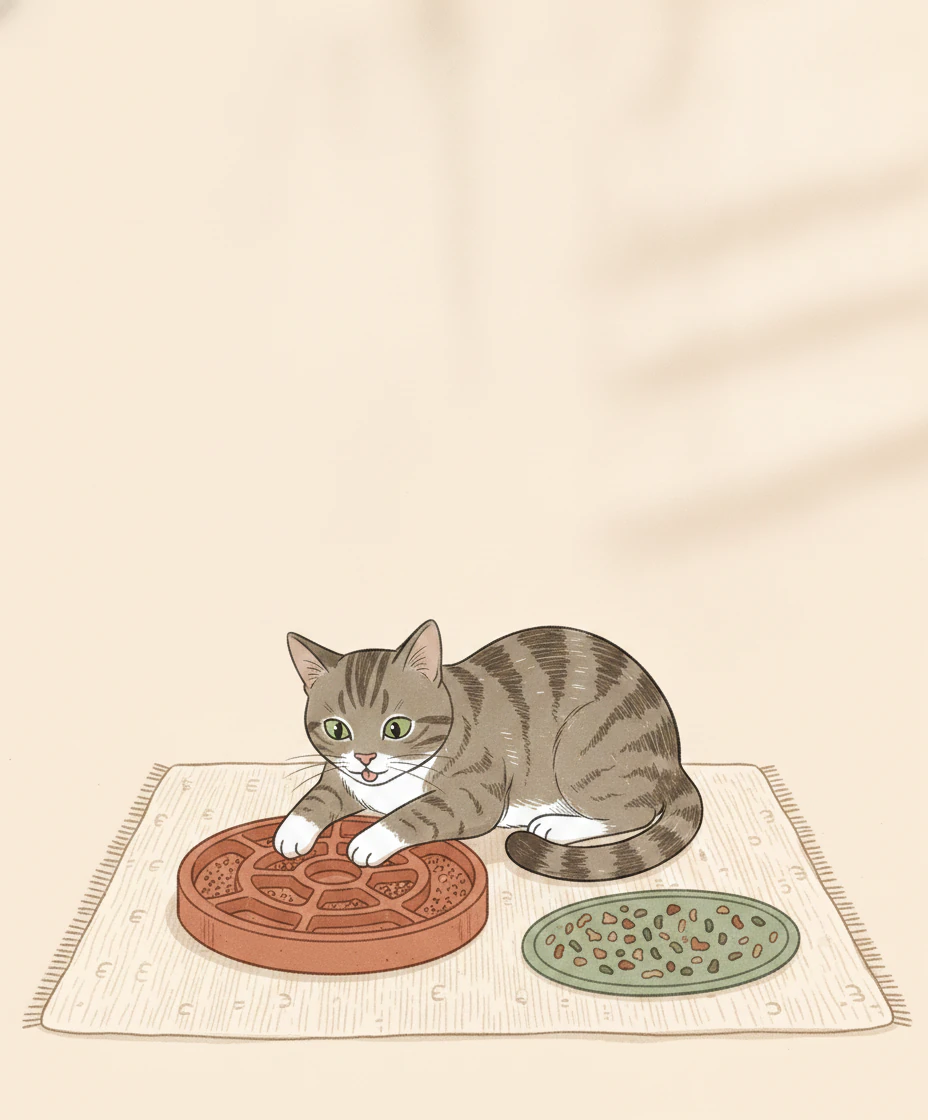
A cat with separation anxiety cries, scratches, toilets outside the tray or won’t eat while you’re out. See your vet first, because illness causes the same signs. Then teach alone time in small steps: reward calm time apart at home, make keys and shoes boring, practise five-second exits, leave a special food puzzle as you go, and lengthen absences only while your cat stays calm.
Do cats really get separation anxiety?
Some do, though less often than dogs. Cats Protection says true separation anxiety in cats is thought to be very uncommon, and that a lot of what owners see when they come home is boredom or frustration rather than distress about being apart.
The research is still young. In a 2020 PLOS ONE study, researchers in Brazil interviewed 130 owners about 223 cats and found that 30 of them, about 13%, met at least one of their criteria for a separation-related problem. The authors point out that their questionnaire still needs validating, so treat that figure as a first estimate. One finding is easy to act on: problems were more common in cats with no access to toys.
Cats Protection also finds no good evidence that any breed, age or type of cat is more prone to it. Any cat can struggle, and any cat can learn that being alone is safe.
Source: Cats Protection: Can cats get separation anxiety? (September 5, 2026)
What are the signs of separation anxiety in a cat?
The pattern matters more than any single behaviour: the signs happen when you are gone, or start as you get ready to leave. Among the 30 cats in the 2020 study, owners most often reported destructive behaviour (20 cats), excessive vocalising (19), urinating outside the tray (18) and a flat, withdrawn mood (16). Fewer showed aggression or agitation (11 each) or defecated outside the tray (7).
Other clues are following you from room to room before you go, hovering by the door as you pick up your keys, or a meal left untouched until you get back. Cats Protection adds changes in eating, drinking, toileting and sleep, and frantic energy when you return.
A pet camera, which Pounce’s lesson lists as optional, is the quickest way to know. Record the first 15 to 30 minutes after you leave. Many cats settle sooner than their owners fear; others cry or pace at the door, and that tells you where to start. If the crying also comes at night when you are home, that is a different problem with its own fix.
Is it separation anxiety or boredom?
Ask when it happens. Distress tied to your leaving starts with your departure cues or in the first minutes after the door shuts. Boredom builds over long, empty hours: Cats Protection notes that a bored cat may overgroom, overeat or damage furniture, and that a lively greeting when you return doesn’t necessarily mean your cat was sad.
The good news is that the first fix is the same for both: a home with more to do in it. Daily play, food puzzles, a window to watch and places to climb and hide help a bored cat outright, and they give an anxious cat something better to do while you are out.
Source: Cats Protection: How long can you leave a cat alone? (June 29, 2023)
How to help a cat with separation anxiety: 8 steps
- Start with a vet check. Over-grooming, accidents, vomiting and appetite changes can all come from illness, so rule that out first (more on this below). Success: your vet has found nothing, or is treating what they found.
- Make home worth staying in. Set up a window perch, a cosy raised resting spot and two or three food puzzles. Put aside one or two long-lasting treats, such as a lick mat or a stuffed and frozen treat toy, for departures only. Cats Protection also recommends a short play session before you leave and when you get home. Success: your cat uses the perch and works the puzzles on their own.
- Reward calm time apart while you are home. Put a comfy bed a few feet from where you sit. When your cat settles there, click (or say “yes”) and toss a treat. Do this a few times a day for two or three days, and let them come to you for affection rather than calling them over. Success: your cat chooses their own spot across the room.
- Make leaving cues boring. Pick up your keys, then sit down. Put on your shoes, then make tea. Do these fake departures a few times a day without leaving. Success: keys and shoes barely get a glance.
- Practise five-second goodbyes. Walk out the door, count to five, and come back in calmly with no big greeting. Repeat a handful of times. If your cat cries or rushes the door, cut it to one or two seconds. Success: your cat stays relaxed through every exit.
- Close the door for 20 to 60 seconds. Vary the times, for example 10 seconds, then 40, then 20, so there is no predictable countdown. Success: your cat waits calmly or wanders off to do something else.
- Add the departure puzzle. As you head out, set down the special treat. Pick it up again when you are home, so it only exists while you are gone. If it is still untouched when you get back, the absence was too long. Success: your cat is eating or foraging while you are out, which is the biggest green light of all.
- Lengthen real absences slowly. Go to the mailbox, then around the block, then 15 minutes, 30 minutes, an errand, half a day and finally a working day. Keep goodbyes quiet, and on your return wait until your cat is calm before you fuss over them. Any pacing or crying on the camera means drop back to the last easy length. Success: your cat eats, rests and uses the tray normally while you are out.
These steps follow Pounce’s Separation Anxiety and Home Alone lesson. Spend about 10 minutes a day on them, and move on only when your cat is relaxed at the current step. The rule throughout: every absence ends before your cat gets upset.
Source: Cats Protection: Can cats get separation anxiety? (September 5, 2026)
How long does it take?
Pounce’s lesson plans for three to six weeks to a noticeably calmer cat. Early wins, like eating the departure puzzle or a quiet first few minutes on the camera, often show in the first week or two.
Progress isn’t a straight line. Some days you will hold at the same length, and that is fine. Big changes, such as a move, a new work schedule or the loss of a companion animal, can bring the worry back. When they do, return to short, easy absences for a few days, then build up again.
Once you are there, keep what worked: daily play, fresh food puzzles, calm goodbyes and the occasional reward for settling apart.
How long can you leave a cat alone?
Cats Protection puts the maximum for a healthy adult cat at around 12 hours, and only occasionally, not as a regular routine. Young kittens should be left for no more than a few hours at a time, and older cats or cats with medical conditions need checking on more often.
For a cat who has never been alone much, such as a new kitten or a cat whose owner has worked from home, Cats Protection suggests practising short absences of five to 10 minutes a few times a day. For trips longer than a day, arrange a cat sitter or a cattery.
Source: Cats Protection: How long can you leave a cat alone? (June 29, 2023)
When to call your vet
Before you start any training. Pounce’s lesson opens with a vet check because the classic signs blamed on separation, such as over-grooming, peeing outside the tray, not eating and vomiting, are also signs of skin disease, urinary problems, digestive trouble, an overactive thyroid and pain. Those need treatment, not training.
Go back to your vet if your cat stops eating, hurts themselves at a door or window, or shows new over-grooming or accidents during the plan. Cats Protection advises speaking to a qualified behaviourist if your cat still shows intense crying or distress for 15 minutes or more after you leave. Your vet can refer you and discuss whether other support would help alongside the training.
Source: Cats Protection: Can cats get separation anxiety? (September 5, 2026)
Helping your cat with Pounce
Pounce’s Separation Anxiety and Home Alone lesson turns this plan into short, illustrated days: a medical check, a setup day, calm time apart, boring keys, five-second goodbyes, closed-door absences, the departure puzzle, low-key hellos and goodbyes, longer absences and a plan for setbacks. Meet the Clicker is the recommended lesson to do first, so you can mark calm moments the instant they happen.
A little guidance goes a long way.
Follow illustrated lessons, take the next small step, and keep track of your cat’s little wins in Pounce.
Explore Pounce for iOSSources & how this guide was written
Pounce curriculum: Separation Anxiety and Home Alone (medical check, setup, calm time apart, departure cues, five-second and closed-door absences, the departure puzzle, calm greetings, longer absences, setbacks and the three-to-six-week timeline), with Meet the Clicker as its recommended first lesson.
- Cats Protection: Can cats get separation anxiety? (September 5, 2026)
- Cats Protection: How long can you leave a cat alone? (June 29, 2023)
- de Souza Machado D. et al., PLOS ONE: Identification of separation-related problems in domestic cats: A questionnaire survey (April 15, 2020)
Sources checked October 29, 2026. This article is educational and has not been individually reviewed by a veterinarian. Our editorial policy explains our approach.