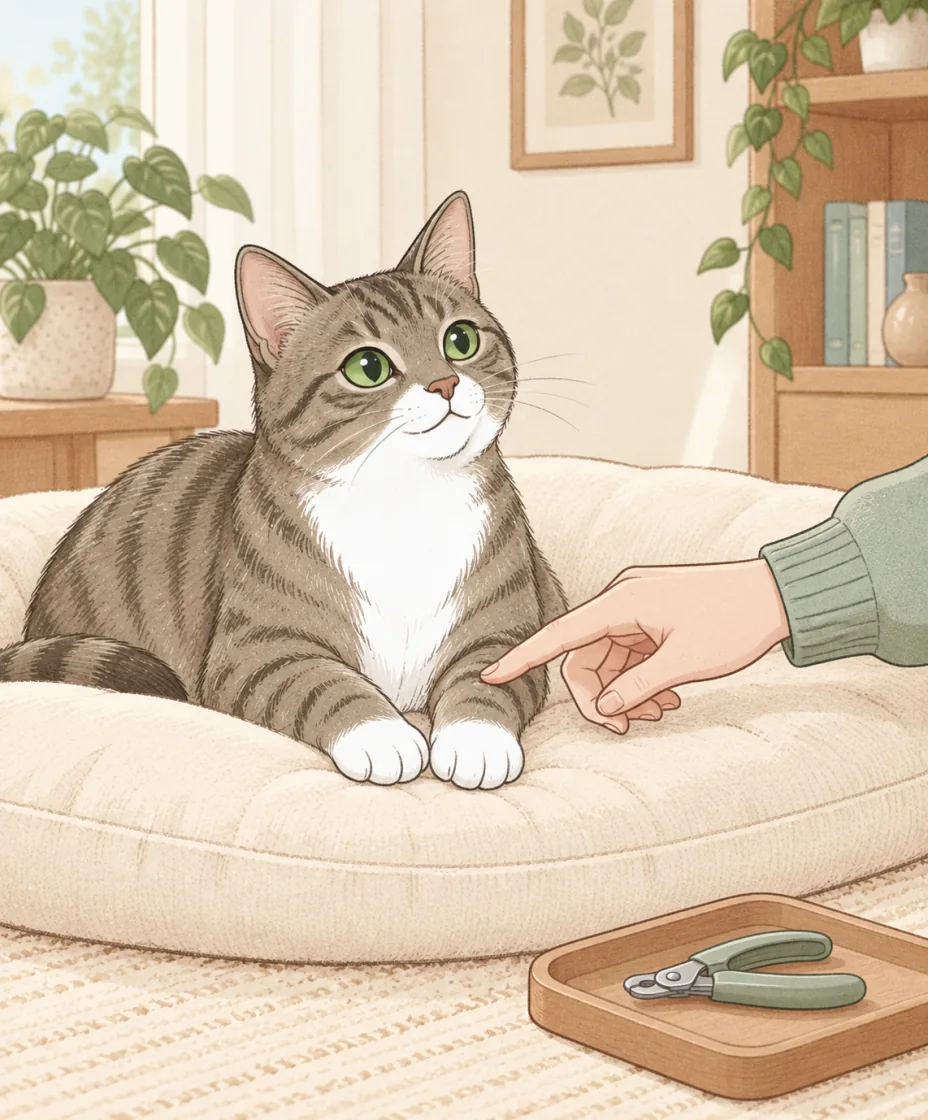
If your cat pulls a paw away, release it and pause. For a comfortable cat whose veterinary needs have been addressed, begin nail-care preparation with a brief touch somewhere they already accept, then a reward. Work toward the paw gradually and introduce clippers separately. Discomfort, suspected pain or an overgrown claw needs veterinary advice before more practice.
First decide whether this can wait for training
If paw handling is uncomfortable, ask your veterinarian to check for a medical problem before treating it as a training issue. A new reaction, limping, swelling, bleeding or a claw that appears to be growing into a pad calls for veterinary attention. Do not keep touching the area to test the reaction.
Cats Protection’s handling guide makes the veterinary check the first step when touch causes discomfort. Its home exercise is intended for cats comfortable with their person, not cats who hide from people or respond aggressively. If reaching toward your cat already brings hissing, swatting or biting, seek individual help rather than trying the progression below.
A trim that is needed now and preparation for a future trim are separate jobs. Your veterinary team can help with the immediate care and show you a suitable way to practice afterward.
Make the first session smaller than a paw hold
Choose a familiar, stable place where your awake cat already rests comfortably. Sit beside them without blocking the way out. Have a few small, suitable rewards ready, and leave the clippers put away. For this session, there is nothing to cut and no set number of touches to finish.
Pounce’s Nail Trim Tolerance curriculum begins above the paw, with gentle contact around the shoulder and foreleg. The useful starting point depends on the cat: if an approaching hand changes their posture, the next attempt needs more space rather than a quicker reach.
In Pounce’s care path, Start Button Behavior comes first. A familiar ready posture can help organize the invitation, but being on a mat or eating a treat is not blanket permission to handle a paw. Every withdrawal still stops your hand.
Practice a brief touch, release and reward
- Let your cat choose to remain beside you. Move your hand into view from the side, rather than surprising them from behind.
- Offer one brief, light touch at the comfortable starting area, such as the shoulder. Remove your hand and give the prepared reward. If you use a familiar marker, mark that easy moment and follow it with the reward.
- Pause with your hand away. Notice whether your cat remains comfortable and interested before offering another touch. Stop if they shift away, tense, turn sharply toward the hand or leave.
- Across later practices, move the contact only a little farther down the foreleg. Keep it light and brief. Do not also make the touch longer as you move to a less familiar area.
- Eventually, a light contact at the paw may be comfortable. Keep the paw resting naturally; lifting, holding, extending a claw and using clippers are additional steps. None is required to finish this first exercise.
This is an adaptation of the early handling steps in our curriculum. Start only where gentle touch is already comfortable; you are not trying to make your cat endure contact they dislike.
Record the contact that was comfortable
A precise note makes the next attempt easier to choose. Our example below separates location, duration and equipment. It is a planning aid, not a way to diagnose why a cat moved.
For example: “One light touch above the left paw; body stayed loose. Reached toward the right leg; cat moved away; stopped.” The next session can return to the comfortable contact. There is no need to make both sides match that day.
| What happened | What to change next time |
|---|---|
| Brief shoulder touch was comfortable; reaching lower caused a weight shift. | End the attempt. Return to the comfortable area on another occasion. |
| A light paw touch was comfortable; covering the paw prompted withdrawal. | Remove the hand immediately. Do not add a hold to the familiar touch. |
| The cat stayed on the cushion but became tense. | Stop. Remaining in place is not enough evidence to continue. |
| The closed clippers caused a retreat even without touch. | Put them away. Later, start farther away without handling the paw. |
Introduce the tool without adding a trim
When the early touches are comfortable, give the clippers their own introduction. Keep them closed and under your control, at a distance where your cat remains at ease. Reward a comfortable moment with the tool present, then put it away. Sniffing is optional; do not bring it to the nose or paw to obtain a reaction.
Pounce separates seeing the clippers, their sound, contact and an eventual cut. You do not need to attempt those later steps today. If the tool changes your cat’s behavior, stop and make the next introduction easier. Eating while withdrawing or tensing does not make the handling comfortable.
A high five is also a different task: offering a brief paw touch does not establish comfort with having that paw held. Avoid turning a familiar trick into a surprise nail trim.
Before the first actual trim
Ask your veterinarian or veterinary nurse for a demonstration with your cat. Cat Friendly Homes recommends suitable feline nail trimmers, a calm environment, breaks and rewards. Being ready for paw contact does not tell you where it is safe to cut; if you are unsure, let the veterinary team handle the trim.
Cats Protection advises contacting a vet for claw changes or suspected growth into the paw pad. Do not delay that appointment to finish a practice schedule. The carrier may need its own preparation, which you can plan separately with the team.
Pounce includes Nail Trim Tolerance and Start Button Behavior for guided care practice. This guide covers the preparation and adds an observation table; it does not promise a completion date or replace individual care. Sources and curriculum were checked September 22, 2026.
A little guidance goes a long way.
Follow illustrated lessons, take the next small step, and keep track of your cat’s little wins in Pounce.
Explore Pounce for iOSSources & how this guide was written
Pounce curriculum: Nail Trim Tolerance and its prerequisite Start Button Behavior. The observation table separates contact location, duration and tool presence. This educational preparation guide does not provide a cutting procedure, individual diagnosis or guaranteed completion time.
- Cats Protection: Train your cat to accept handling (October 2, 2018)
- Cat Friendly Homes: Nail Trimming
- Cats Protection: How to trim cat claws
Sources checked September 22, 2026. This article is educational and has not been individually reviewed by a veterinarian. Our editorial policy explains our approach.