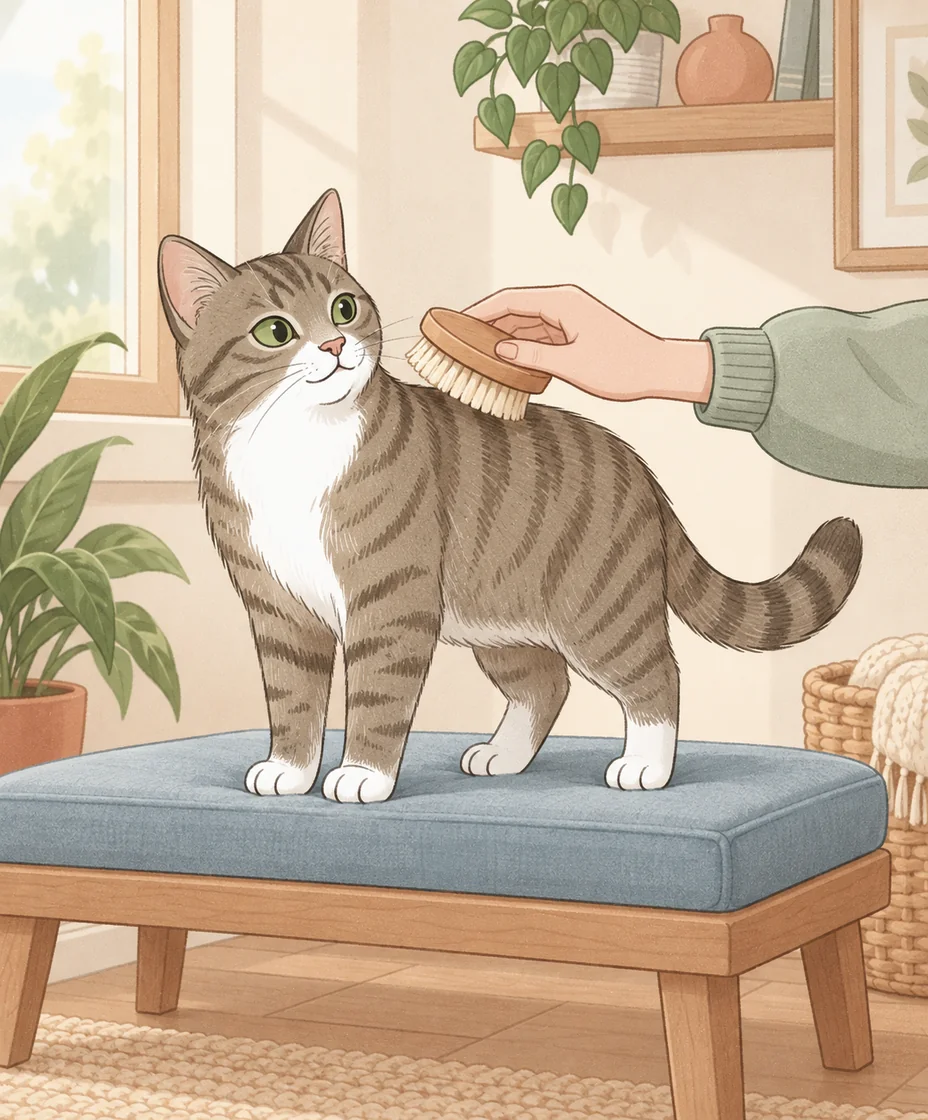
If your cat avoids the brush, begin with it visible at a comfortable distance, without touching them. Reward an easy moment, put it away, and build toward brief contact across separate practices. Stop when your cat withdraws. Existing mats, sore skin or a change in grooming need veterinary advice before more brushing.
Check whether the coat needs help now
Learning to accept a brush and dealing with a matted coat are separate jobs. Cats Protection advises veterinary help for mats: pulling them out or cutting them with scissors can injure the skin. Do not use a brushing lesson to work through a knot, and do not postpone needed coat care while training catches up.
If your cat has started grooming differently, reacts to touch, or has sore or damaged skin, describe that change to your veterinary team. Ask for an assessment and a practical care plan. You do not need to keep touching an uncomfortable area to demonstrate the problem.
Choose one tool and an easy place to pause
For a cat already comfortable beside you and with ordinary gentle touch, choose a familiar, stable surface with room to leave. A folded fleece on the floor may be easier to reach than a table. Keep the brush put away while you first arrange the spot and prepare a few small rewards that fit your cat’s usual diet.
Tool choice depends on the coat and the individual cat. Cats Protection describes combs, brushes and grooming mitts as different options. Ask your veterinary team which tool suits the actual coat-care job. A soft tool used for a first introduction may not be enough for ongoing long-coat maintenance.
Pounce’s Brushing Tolerance sequence starts with a comfortable station before introducing the tool. Its Start Button Behavior lessons practice a ready posture and a pause when the cat moves out of it. Being on a mat is still not permission for unlimited touch: watch the whole response, and stop for withdrawal even if all four paws stay put.
Let the brush appear before it does anything
Set the brush where your cat can see it without retreating or fixing their attention on it. You can reward a comfortable moment with the brush present, then put it away. Sniffing or touching the brush is optional. Do not move it toward your cat to obtain a reaction.
On another occasion, pick it up briefly without reaching toward the cat. Only make the next movement smaller or closer when the current one remains comfortable. Seeing a brush lying still and seeing it move in your hand are different parts of the exercise.
For a cat who hides from an approaching person or reacts aggressively, start with individual help instead of this contact progression. Cats Protection recommends qualified behavior support for cats with difficult grooming experiences. Food should not be used to hold a reluctant cat within reach.
Make the first contact smaller than a brushing session
- Let your awake cat choose to settle near you. Keep your own position out of the exit route, with the reward ready.
- If the brush’s approach is already comfortable, briefly touch its smooth back to a place where gentle touch is welcome, such as the shoulder. Lift it away and reward. If your cat moves away, stop immediately rather than completing the touch.
- Pause with the brush away. Notice whether your cat stays loose and willingly re-engages before another invitation. Remaining still or eating alone is not enough reason to continue.
- Once that light contact is familiar, introduce one short, gentle stroke with the appropriate soft bristles at a comfortable area. Keep clear of the eyes and any knots. Remove the brush and reward.
- End there if that was enough. In later practice, change just one detail: a small amount of movement, another comfortable area, or one additional stroke. Avoid changing the tool and the body area together.
This exercise adapts the early tool-contact stages in Pounce. It is for a willing, comfortable cat after coat and health concerns have been addressed. Each step can take separate practices; there is no deadline to reach the bristles.
Record the part that changed the response
Our short grooming note separates four details: tool, body area, amount of contact and response. For example: “Soft brush; shoulder; one short stroke; stayed loose. Second stroke; turned toward brush; stopped.” Next time you have a specific, smaller starting point.
The table below helps plan that next attempt. It does not diagnose pain, fear or the cause of a reaction. If discomfort recurs, take the notes to your veterinary team.
| What happened | What to do |
|---|---|
| Comfortable while the brush rested nearby; leaned away when it was lifted. | Put it away. Later, try a smaller lifting movement farther away, without contact. |
| One light stroke was comfortable; the tail began swishing during the next. | Stop the brush. Keep the next invitation shorter; do not wait for a swat. |
| Still eating, but the body became tense or shifted away. | Stop contact. Taking food does not override a request for space. |
| The tool caught in a knot, or a particular area seemed sore. | Stop and ask your veterinary team about coat care. Do not pull harder or try another pass. |
Keep practice separate from finishing the whole coat
You can record a useful practice even when very little loose hair comes off. Later maintenance needs will depend on the coat and your cat’s health. Agree an achievable grooming plan with your veterinary team if your cat needs more care than they currently accept.
Do not hold your cat down, follow them with the brush, or sneak in extra strokes while they sleep. If they leave, put the tool away. A comfortable return on another occasion gives you a place to resume; it does not require a longer session.
We make Pounce, which includes Brushing Tolerance and Start Button Behavior. This guide adds the four-part grooming note and troubleshooting examples. Sources and curriculum were checked September 27, 2026. It was prepared with AI assistance and has not been individually reviewed by a veterinarian.
A little guidance goes a long way.
Follow illustrated lessons, take the next small step, and keep track of your cat’s little wins in Pounce.
Explore Pounce for iOSSources & how this guide was written
Pounce curriculum: Brushing Tolerance and Start Button Behavior. The guide adapts tool introduction, gentle contact and pauses, with an original tool/area/contact/response record. It does not reproduce fixed timelines, diagnostic claims, or the assumption that accepting food or holding still proves comfort. Sources checked September 27, 2026; no brush brands tested or ranked.
- Cats Protection: Grooming your cat
- Cats Protection: Tips for grooming long-haired cats (August 24, 2020)
Sources checked September 27, 2026. This article is educational and has not been individually reviewed by a veterinarian. Our editorial policy explains our approach.