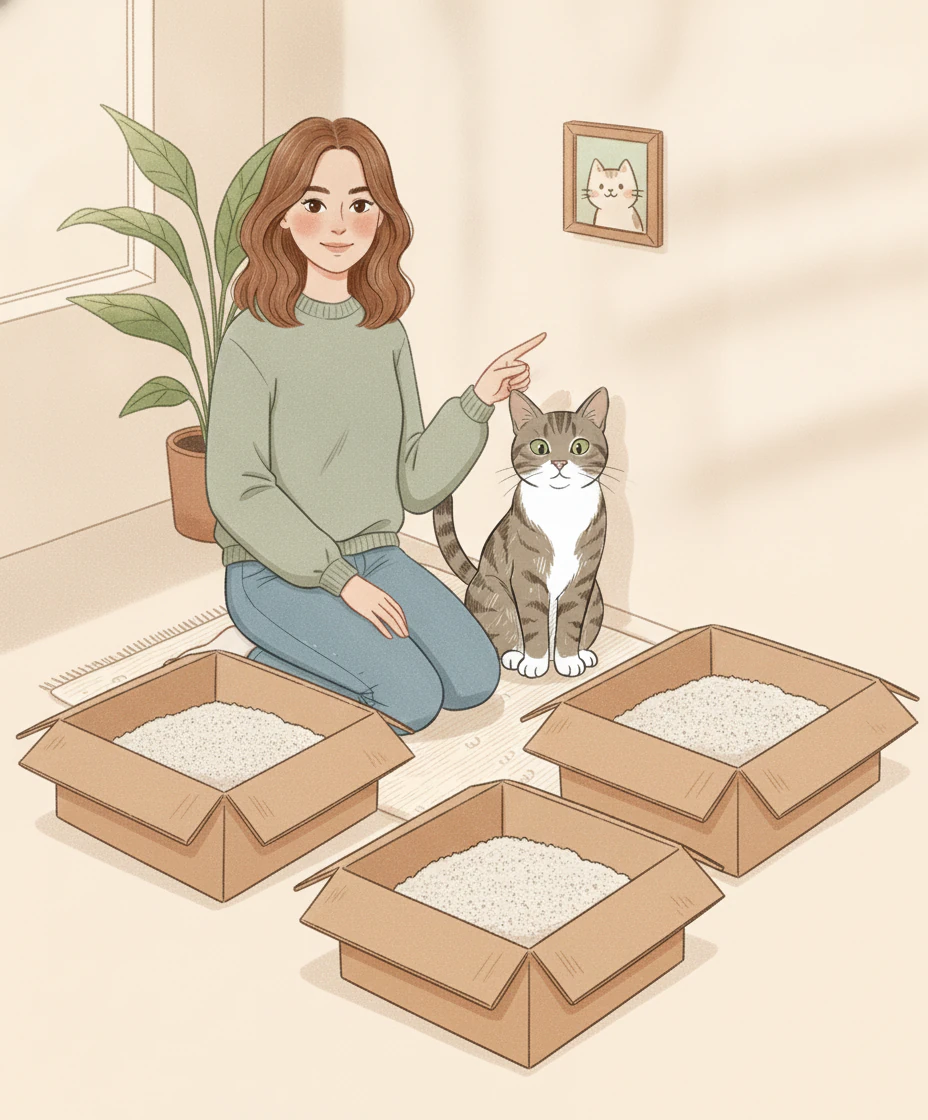
Set up a shallow, uncovered tray of unscented litter in a quiet spot away from food, and keep your kitten in one room with it at first. Take them to the tray after every meal, nap and play session, let them sniff and dig, and praise them once they step out. Scoop at least daily, clean accidents with an enzymatic cleaner, and stay calm.
What you need before your kitten comes home
A tray with low sides. Small kittens need to walk in and out without climbing, VCA Animal Hospitals notes, so start with a shallow, uncovered tray and move up to a full-size box — about one and a half times your cat’s body length — as they grow.
The right number of trays. One per cat plus one extra is the rule ASPCA, VCA and Cats Protection all give. For a single kitten that means two. Put them in different spots: Cats Protection points out that trays lined up side by side count as one tray from a cat’s point of view.
Unscented litter, 1 to 3 inches deep. ASPCA finds most cats prefer a fine to medium clumping litter about one to two inches deep; VCA suggests about three inches for digging. PetMD advises non-clumping litter until about 8 to 10 weeks, because very young kittens sometimes taste it, then a switch to clumping. If the shelter or breeder used a particular litter, start with that one: ASPCA notes that cats form their litter preferences as kittens.
An enzymatic cleaner for accidents, and one small room — a bedroom or bathroom — where your kitten can spend the first days with their tray, food, water and bed.
Source: VCA Animal Hospitals: How to litter train your kitten
How to litter train a kitten: 6 steps
- Start in one room. Put the tray at one end of the kitten’s room and the food, water and bed at the other. VCA recommends keeping a new kitten in a room with the box and not letting them roam unsupervised until they use it every time. Success on day one: your kitten eats, plays and finds their way around the room.
- Show them the tray as soon as they arrive. Set your kitten down beside it and let them sniff. Run your fingers through the litter so they hear and see the digging. Then let them choose: lifting them in and holding them there turns the tray into a place they want to leave. Success: they step in by themselves, sniff, and paw at the litter.
- Time the trips. Kittens tend to go soon after eating, drinking, waking and playing, PetMD notes, so carry or walk your kitten to the tray at each of those moments and give them a minute. Watch for sniffing at the floor, circling or crouching between trips, and head to the tray when you see it. For a young kitten, that means a trip every few hours.
- Praise them once they step out. A soft “good” as they finish, then a treat or a short game after they leave the tray. Pounce’s Litter Box Troubleshooting lesson keeps rewards out of the box itself, because a hand or a treat arriving mid-toilet can startle a cat. Success: your kitten heads to the tray without being carried there.
- Keep it clean. Scoop at least once a day — ASPCA’s minimum — or twice, as Cats Protection advises, and wash the tray every week in hot, soapy water before refilling it. A kitten who finds the tray dirty will look for a cleaner corner.
- Open up the house slowly. Once your kitten has used the tray every time for about a week, give them one more room, and put the second tray there. VCA suggests a tray on every floor of a larger home. Keep the first tray where it is: moving it just as your kitten learns its location starts the training over.
Most kittens already know what litter is for. Their mother showed them, and digging in loose material comes naturally. What they don’t know yet is where the toilet is in your house. These six steps teach them that.
Source: VCA Animal Hospitals: How to litter train your kitten
Where should the litter box go?
Somewhere quiet, easy to reach and away from food. Cats Protection lists the places to avoid: next to washing machines, in doorways and corridors, near cat flaps, and next to food, water or beds. ASPCA adds the spot next to the dog’s bowls. A kitten startled by a spinning dryer once may decide that corner is not worth the risk.
Pick a spot where the kitten can see who is coming and has a way out. That is also why an open tray works better than a hooded one for kittens. ASPCA recommends removing covers and liners, and VCA suggests taking the cover off if a kitten avoids the box. If you have a self-cleaning box, VCA advises checking its age and weight limits before a kitten uses it.
How old does a kitten need to be?
Kittens start using litter at around four weeks, PetMD notes. Before that, their mother licks them to make them go. If you’re hand-raising an orphan younger than that, ask your vet or rescue to show you how to stimulate them after each feed, and offer a shallow tray once they start walking steadily.
Most kittens come home at eight weeks or older. Cats Protection recommends keeping kittens with their mother until at least eight weeks because they are still learning from her, so a kitten from a good home usually arrives with the basics. All you have to teach is where the toilet is in your house.
Those first weeks matter for more than the tray. Pounce’s Kitten Socialization lesson describes roughly 2 to 9 weeks as the window when kittens file new things as normal, with benefits lasting to about 14 weeks. That makes the first weeks at home a good time for gentle handling, new sounds and a carrier left open in the living room.
Source: PetMD (Jamie Lovejoy, DVM): How to litter train a kitten (May 13, 2024)
How long does it take to litter train a kitten?
Many kittens use the tray on their first day. Plan for one to two weeks of supervision and timed trips, and keep the one-room setup until you have gone about a week without an accident.
A kitten that came from outdoors, or from a home with poor litter habits, may take longer, because they learned to go on soil, grass or bedding. Give them a little longer in the one-room setup, keep the trips timed, and try a finer, sandier litter if they hesitate on the one you have.
If accidents are still regular after two weeks with a clean tray in a quiet spot, look for the cause rather than waiting. Pounce’s Litter Box Troubleshooting lesson plans for the first improvement within a day or two of the right change, and two to four weeks to settle a problem fully.
What if my kitten has an accident?
Clean it up and move on. Use an enzymatic cleaner made for pet urine, which ASPCA and VCA both recommend, because ordinary sprays leave a smell your kitten can still detect, and that smell invites a repeat. ASPCA warns against ammonia-based cleaners for the same reason: to a cat, they smell like urine.
Never punish your kitten, rub their nose in it or carry them to the tray afterwards. ASPCA, VCA and Cats Protection all advise against it, and it teaches a kitten to hide where they go, not to use the tray.
Then read the clue. Where the accident happened tells you what your kitten wanted. On a soft rug or bedding, they may want a finer litter. In a plant pot, they may prefer soil: cover the pot with stones or foil and try a litter closer to that texture. In a corner far from the tray, the tray may be too far away, too busy or too dirty. VCA suggests offering a “buffet” of two or three tray styles and litters and letting the kitten choose.
When to call your vet
Call your vet if your kitten strains in the tray, cries while going, passes blood, makes many trips for very little urine, or has diarrhoea or constipation. ASPCA lists frequent small amounts, straining and blood in the urine as signs of urinary problems that need a vet, not training. Kittens are small, so call the same day if diarrhoea comes with tiredness or a kitten who won’t eat.
Also book a check if accidents carry on despite a clean, well-placed tray, or if a kitten who was reliable suddenly stops. VCA and Cats Protection both say to rule out a medical cause before treating it as a habit. Parasites, infections and pain can all send a kitten away from the tray.
Litter training with Pounce
Pounce’s Litter Box Troubleshooting lesson walks through the same setup as daily tasks with illustrations: one tray per cat plus one, uncovered trays at least one and a half times the cat’s length, unscented litter two to three inches deep, daily scooping and an enzymatic clean of every old spot. It starts with a vet check and never asks you to punish.
When the tray is sorted, Kitten Socialization is the lesson to start next. It covers short, happy introductions to new people, sounds, surfaces and handling while your kitten is young enough for them to stick.
A little guidance goes a long way.
Follow illustrated lessons, take the next small step, and keep track of your cat’s little wins in Pounce.
Explore Pounce for iOSSources & how this guide was written
Pounce curriculum: Litter Box Troubleshooting (setup, daily scooping, enzymatic cleaning, no rewards inside the box) and Kitten Socialization (the early socialization window).
- VCA Animal Hospitals: How to litter train your kitten
- ASPCA: Litter box problems
- Cats Protection: Toileting
- PetMD (Jamie Lovejoy, DVM): How to litter train a kitten (May 13, 2024)
- Cats Protection: Kitten care
Sources checked October 28, 2026. This article is educational and has not been individually reviewed by a veterinarian. Our editorial policy explains our approach.