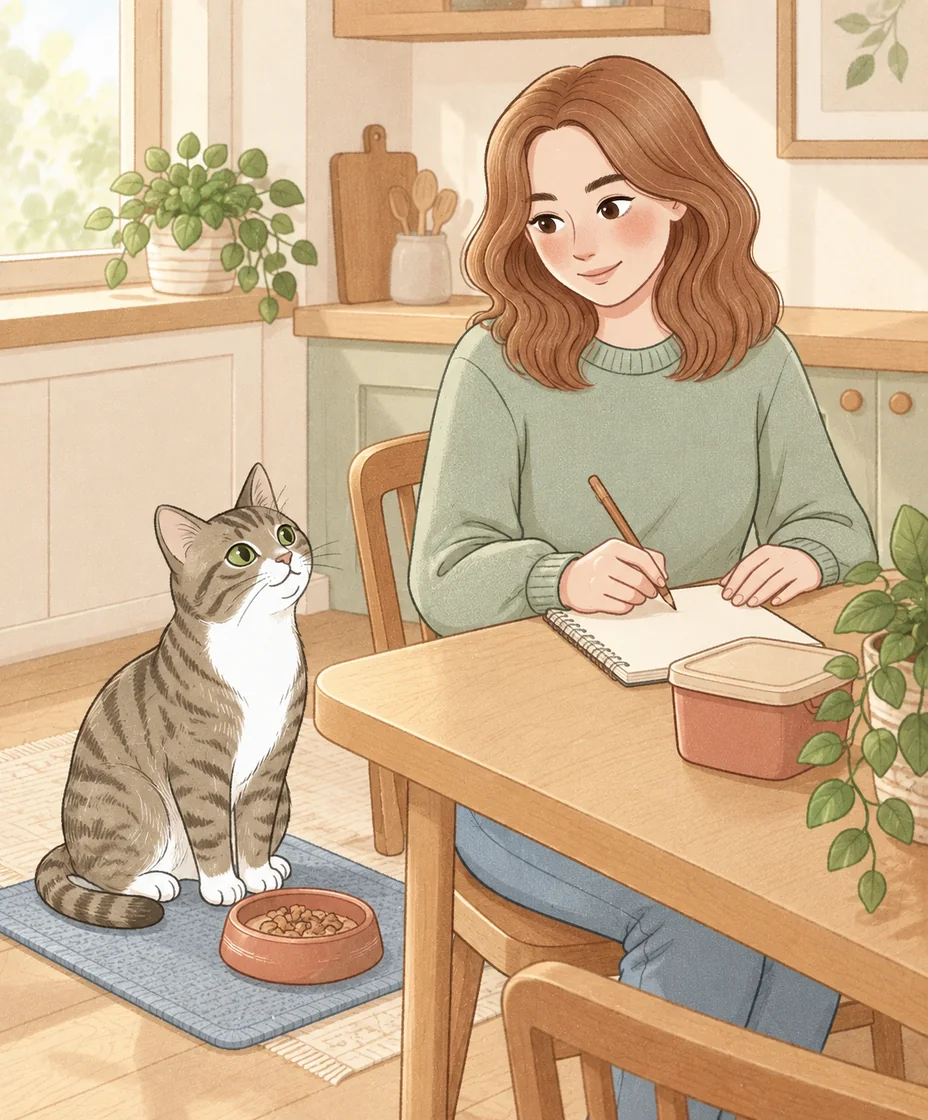
If your cat keeps begging for food, first check that their diet and actual intake meet their needs, and discuss new or excessive hunger with your veterinarian. Then agree on one household feeding plan: record portions, include training rewards, arrange suitable meals and prepare an alternative activity before people eat. Do not make hunger, prolonged distress or biting something your cat must endure to earn a meal.
Check the food plan before changing the response
Begging is an observation, not a diagnosis. A cat following people into the kitchen does not tell you how much they have eaten, whether another cat took their food, or whether their appetite has changed. Do not infer the cause from a rescue history alone.
Cornell recommends working with your veterinarian on an appropriate body weight and food amount. Bring the food names, amounts offered, treats and any recent weight changes. A generic portion for a ‘medium active cat’ is not an individual feeding prescription. Preserve medical diets and medication-related meal instructions.
Contact your vet about new or increasing hunger, especially with weight loss, increased thirst, vomiting or other changes. Cornell lists increased appetite and weight loss among possible signs of hyperthyroidism, but those signs do not establish that diagnosis. If your cat starts refusing their usual food, seek veterinary advice rather than waiting for them to accept a new feeding system.
Source: Cornell Feline Health Center: Feeding your cat (updated April 30, 2026)
Adjust access and timing with the daily total in mind
The AAFP’s 2018 feeding consensus recommends tailoring meals to the cat and household, including multiple small meals, accessible feeding locations and monitoring actual intake. Discuss how to distribute the appropriate daily amount with your veterinary team. More feeding opportunities need not mean more food overall.
In a multi-cat home, provide comfortable separate eating locations and check who actually eats. An empty shared bowl does not show that every cat got their portion. Protect a slower eater’s unfinished food when the first cat finishes, and arrange further access if the slower cat eats gradually. Moving bowls out of the kitchen does not establish that food access or the daily amount is adequate.
A timed feeder is one possible convenience after checking suitability for the food and cat. It is not required for this plan, and a frightened cat or failed mechanism needs attention. Follow food-storage and cleaning instructions rather than leaving a meal out indefinitely.
Source: AAFP consensus statement: Feline feeding programs (2018)
Agree on the next meal before anyone sits down
- Choose who will provide the cat’s planned portion and mark it on the shared record. Keep suitable food accessible according to the agreed feeding plan.
- Before the human meal begins, offer a familiar, easy food activity using part of that allowance, if your cat enjoys it. An ordinary bowl remains a valid option.
- Keep human food on the table for people. Save planned training rewards for a separate, quiet practice opportunity, such as voluntarily visiting a comfortable mat.
- Decide what to do if the arrangement becomes difficult: stop the training attempt, create space safely and review the setup. Do not turn dinner into an escalating test of ignoring.
This agreement is about preparing a manageable situation. It should not depend on one person resisting pressure while everyone else improvises. Include visitors and children in an age-appropriate way, with adults responsible for the food plan.
A puzzle should fit the cat’s food, not force a diet change
The AAFP guidance includes puzzles suitable for wet or dry food and recommends an easy starting point. You do not need to replace familiar wet food with dry food just to use a feeding toy. Learn the equipment separately, and check that the cat can retrieve food comfortably.
Cats Protection advises gradual food changes and returning to the old food with veterinary advice if the new food is refused or the cat becomes unwell. Do not leave a necessary meal trapped in a difficult puzzle or wait for hunger to overcome reluctance. For medical diets, check any proposed change with the prescribing team.
Biting changes the plan
If your cat claws at legs, bites ankles or guards food, prioritize space and safety and seek veterinary and qualified behavior support. Do not grab an aroused cat, shout or spray water. FelineVMA advises veterinary assessment for biting and warns that punishment can worsen fear and aggression. An increase in dangerous behavior is not proof that you should keep ignoring harder.
Review the record together without blaming a family member. A missed entry, inaccessible portion or new symptom gives you a concrete next action. Reward comfortable alternative behavior in separate, easy practice and preserve ordinary play and positive interaction. There is no promised number of meals until begging ends.
We make Pounce, which includes Begging at the Table and Go to Mat / Place. This guide adds the shared feeding record and household agreement; it does not replace nutritional or behavioral assessment. Sources and curriculum checked October 19, 2026. Prepared with AI assistance; not individually reviewed by a veterinarian.
Source: FelineVMA: Training techniques for addressing undesirable behaviors
A little guidance goes a long way.
Follow illustrated lessons, take the next small step, and keep track of your cat’s little wins in Pounce.
Explore Pounce for iOSSources & how this guide was written
Pounce includes Begging at the Table and Go to Mat / Place. The shared feeding record and pre-meal household agreement are original planning tools, with no promised behavior-change deadline or individual calorie prescription.
- Cornell Feline Health Center: Feeding your cat (updated April 30, 2026)
- Cornell University Hospital for Animals: Feline hyperthyroidism
- AAFP consensus statement: Feline feeding programs (2018)
- Cats Protection: Feeding your cat
- FelineVMA: Training techniques for addressing undesirable behaviors
Sources checked October 21, 2026. This article is educational and has not been individually reviewed by a veterinarian. Our editorial policy explains our approach.