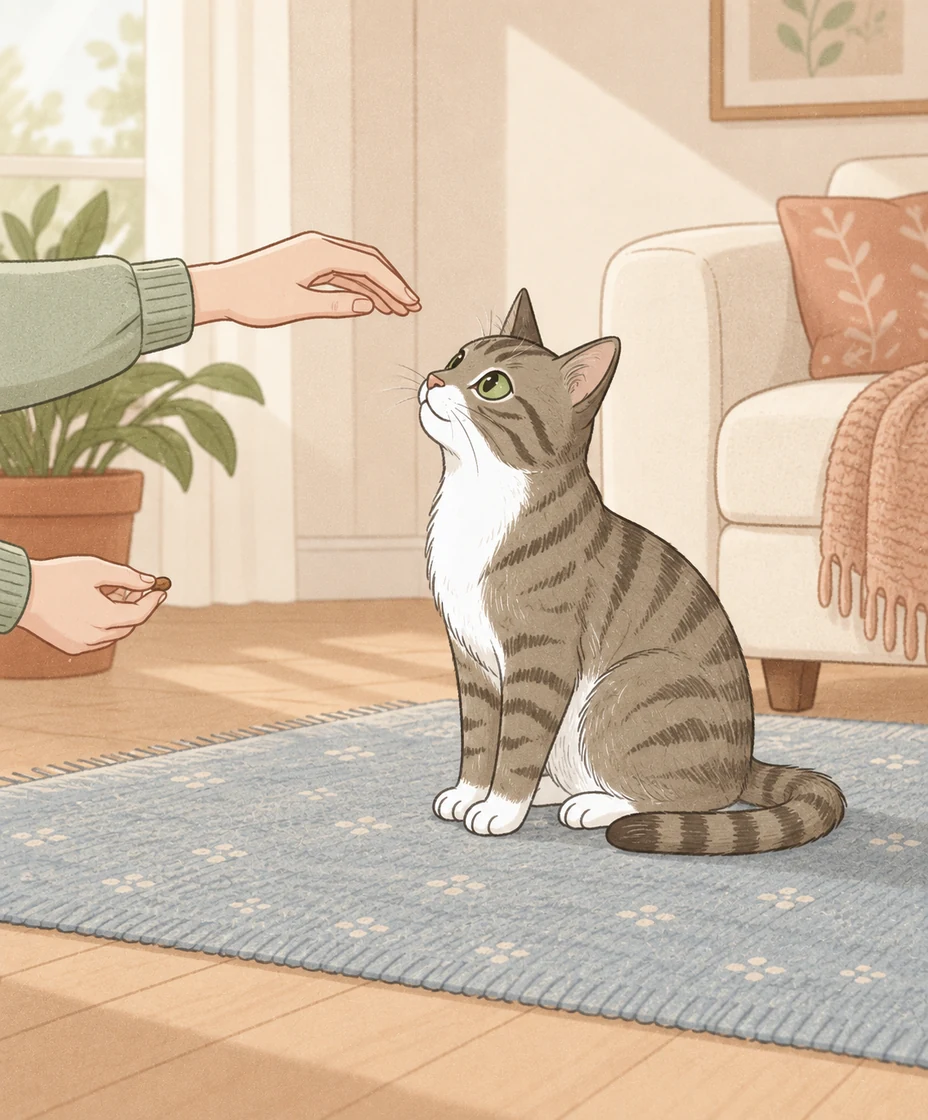
To teach a cat to sit, invite a small upward-and-back movement with a suitable treat near the nose, then mark and reward when the hindquarters reach the floor. Keep the front paws grounded and never push the cat into position. Once the movement is familiar, practice an empty-hand signal before adding the word “sit.”
Choose a comfortable starting position
Practice with an awake, willing cat on a stable surface where they can move away. Prepare a few small, suitable rewards and use a familiar click or quiet word to mark the action. You do not need to make your cat hungry or finish a set number of repetitions.
Cats Protection’s sit guide uses voluntary movement, positive reinforcement and a gradual transition toward a cue. It also cautions against physically forcing the position. This article adapts Pounce’s Sit on Cue curriculum; the welfare guide is supporting context, not a test of our app.
Mark the moment the bottom reaches the floor
- With your cat standing comfortably nearby, present a tiny treat close enough to notice without pressing it against the nose. Keep your own posture unhurried.
- Move the treat a small distance upward and back. Watch for the nose following while the hindquarters lower. Keep the movement low enough that your cat need not rear up.
- As the bottom meets the floor, mark once and deliver the reward. Avoid waiting for a long hold before rewarding the first sit.
- Let your cat change position freely. Offer another easy attempt only if they remain interested; stop if they leave, retreat or become tense.
Your first goal is one comfortable movement. The word can wait. In Pounce’s sequence, the lure introduces the action; later steps teach the hand signal and spoken cue separately.
Change the invitation when the movement changes
Here is an observation aid for ordinary practice, not a diagnosis. Record what moved, where your hand was and what happened next. “Front paws lifted when my hand went higher” tells you what to adjust more clearly than “wouldn’t sit.”
| Observation | Next step |
|---|---|
| Front paws lift or your cat reaches upward | Reset with a lower, smaller lure movement. Do not keep raising the treat. |
| Your cat backs away | Pause and give space. Later, try a smaller invitation; do not block the retreat with a wall or your body. |
| Your cat sits naturally between attempts | You can mark and reward that voluntary sit instead of insisting on a lure. |
| Your cat grabs at the reward hand | Pause, prepare easier delivery and reduce excitement before another attempt. |
| Sitting appears uncomfortable or usual movement changes | Stop the exercise and seek veterinary advice before continuing. |
Remove the visible lure, keep the reward
When your cat comfortably follows the small movement, try the same gesture with an empty hand. Have the actual reward ready in your other hand. Mark the sit and reward afterward. Removing food from the signal does not mean removing the consequence that made sitting worthwhile.
If the empty hand is confusing, return to an easier familiar version and make the transition more gradual. Do not keep waving an empty hand faster. A natural sit that you can mark is another starting point available in Pounce’s curriculum. Whichever route you use, keep your notes clear about whether the cat followed a visible treat or a hand signal.
Let the word predict the familiar signal
Once the empty-hand invitation is familiar, say “sit” once, pause briefly, then give that signal. Mark and reward the action. Keep the order consistent so the new sound comes before the movement your cat already recognizes.
Across later practices, notice whether sitting begins before your hand moves. If you try the word alone and get no sit, pause rather than repeating it insistently. Resume the easier word-then-signal sequence another time. You are checking a learned association, not testing whether your cat is being obedient.
Record the kind of sit you have today
A useful note could be: “sat after the empty hand moved; did not sit after the word alone.” The next practice is then clear: repeat the comfortable signal and give the word a chance to predict it. That is different from making every sit last longer or changing rooms at the same time.
A brief sit is also different from a stay or agreement to be handled. Teach duration and care routines separately. If reaching the position seems painful, or your cat suddenly stops sitting as usual, seek individual veterinary advice. There is no deadline for completing this trick.
Pounce’s Sit on Cue lessons organize the lure, hand signal and word into separate stages. We publish Pounce, and this is educational guidance with AI assistance, not an individually reviewed veterinary plan. Sources and the current curriculum were checked September 15, 2026.
A little guidance goes a long way.
Follow illustrated lessons, take the next small step, and keep track of your cat’s little wins in Pounce.
Explore Pounce for iOSSources & how this guide was written
Pounce curriculum: Sit on Cue. The lure, empty-hand signal, word-before-signal and word-alone stages come from the owned curriculum; the observation table and sample practice note are original adaptations. Fixed timelines, success percentages, wall-blocking and claims that a sit prevents behavior problems are not carried over. Supporting welfare guidance checked September 15, 2026.
Sources checked September 16, 2026. This article is educational and has not been individually reviewed by a veterinarian. Our editorial policy explains our approach.