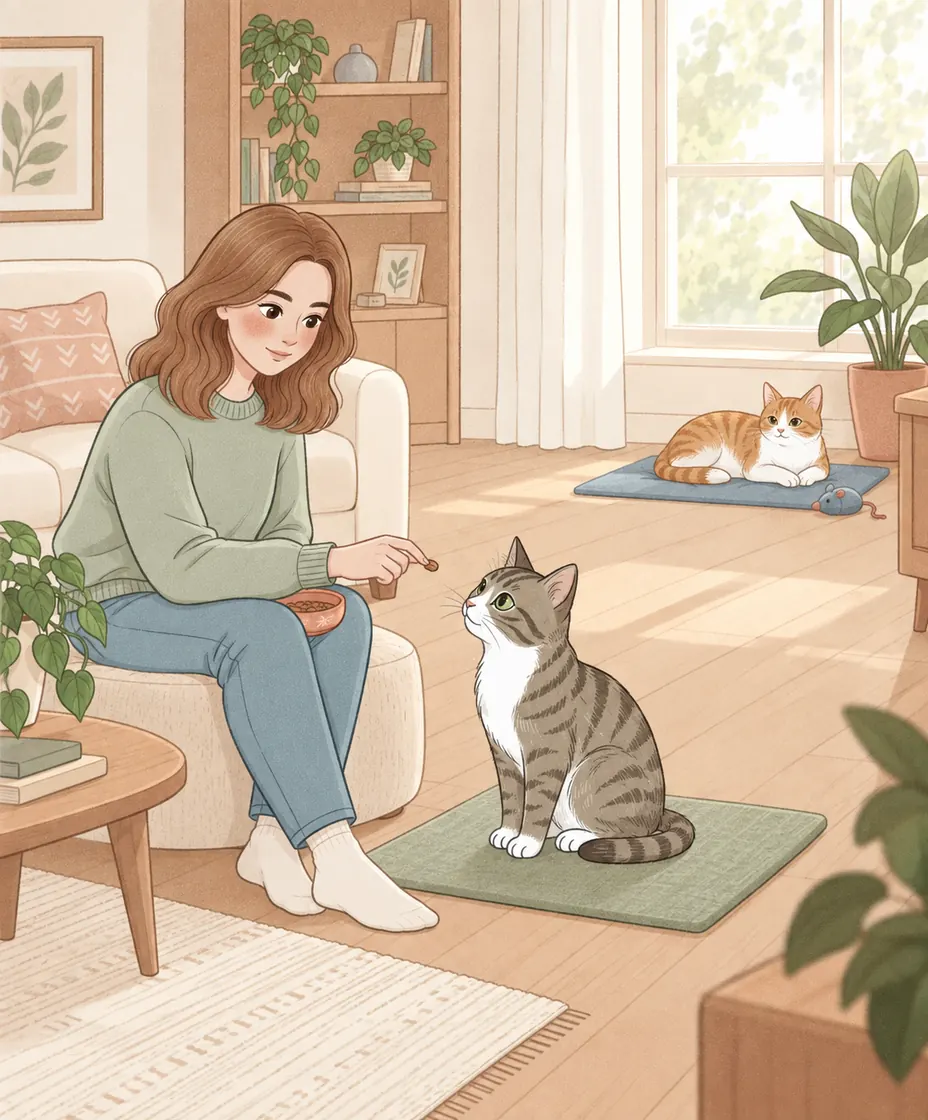
You can practice training in a two-cat home, but separate sessions are a useful starting point. Work with one cat in a familiar, comfortable space while the other has an appropriate activity elsewhere. Each cat should have clear access to their own reward without competing or crowding.
The first challenge is your setup
Imagine one cat touching a target while the other reaches for your reward hand. You may know which action you intended to mark, but the food has become a shared event. Before asking either cat for a more complicated response, simplify what happens around the marker and reward.
This guide adapts the preparation principles in Pounce’s Gather Your Tools and Clicker Charging lessons to a shared home. It is about organizing practice for cats who already live together. It is not a protocol for introducing unfamiliar cats or resolving conflict between housemates.
Separate should still mean comfortable
Use a space the practicing cat already likes. The other cat should have a comfortable place with appropriate resources and something they normally enjoy. Avoid separating them in a way that causes distress. If closing a door makes either cat persistently upset, choose a different moment or arrangement rather than practicing through it.
Keep the marker quiet and the reward easy to deliver. Position yourself so your practicing cat can move away and you can put the materials aside without reaching across them. A session can be very short; the goal is a clear exchange, not an equal number of minutes for every cat.
A simple two-turn plan
- Prepare one cat’s rewards and choose one small goal, such as a voluntary nose touch. Settle the other cat comfortably before beginning.
- Practice a few easy invitations with the first cat. If either cat becomes distressed, stop and change the arrangement.
- Put the target and food away before changing cats. Let both cats return to an ordinary calm routine.
- Later, offer the second cat a separate opportunity with a reward and starting point suited to them. They do not need to copy the first cat’s pace.
For the first attempt, use an exercise each cat already understands, or introduce the marker separately. Do not assume the second cat learns the sound because they heard the first cat’s session from another room.
Keep a separate note for each cat
A useful record might say: “Miso: two easy touches, then walked away. Olive: watched the target; next time start closer.” That gives you two next steps. Comparing which cat is cleverer or asking the less interested cat to continue until they catch up does not help you prepare the next session.
Watch for differences in reward preference, comfortable distance, and willingness to approach. Your own delivery may also need to change. One cat may calmly wait while you reach for food; another may find that hand movement distracting. Prepare accordingly without turning reward delivery into a competition.
A little guidance goes a long way.
Follow illustrated lessons, take the next small step, and keep track of your cat’s little wins in Pounce.
Explore Pounce for iOSSources & how this guide was written
Pounce curriculum: Gather Your Tools, Clicker Charging, and Target Touch. This guide adds an original two-turn household setup and separate observation notes; it is not the app’s multi-cat introduction program.
Sources checked September 12, 2026. This article is educational and has not been individually reviewed by a veterinarian. Our editorial policy explains our approach.