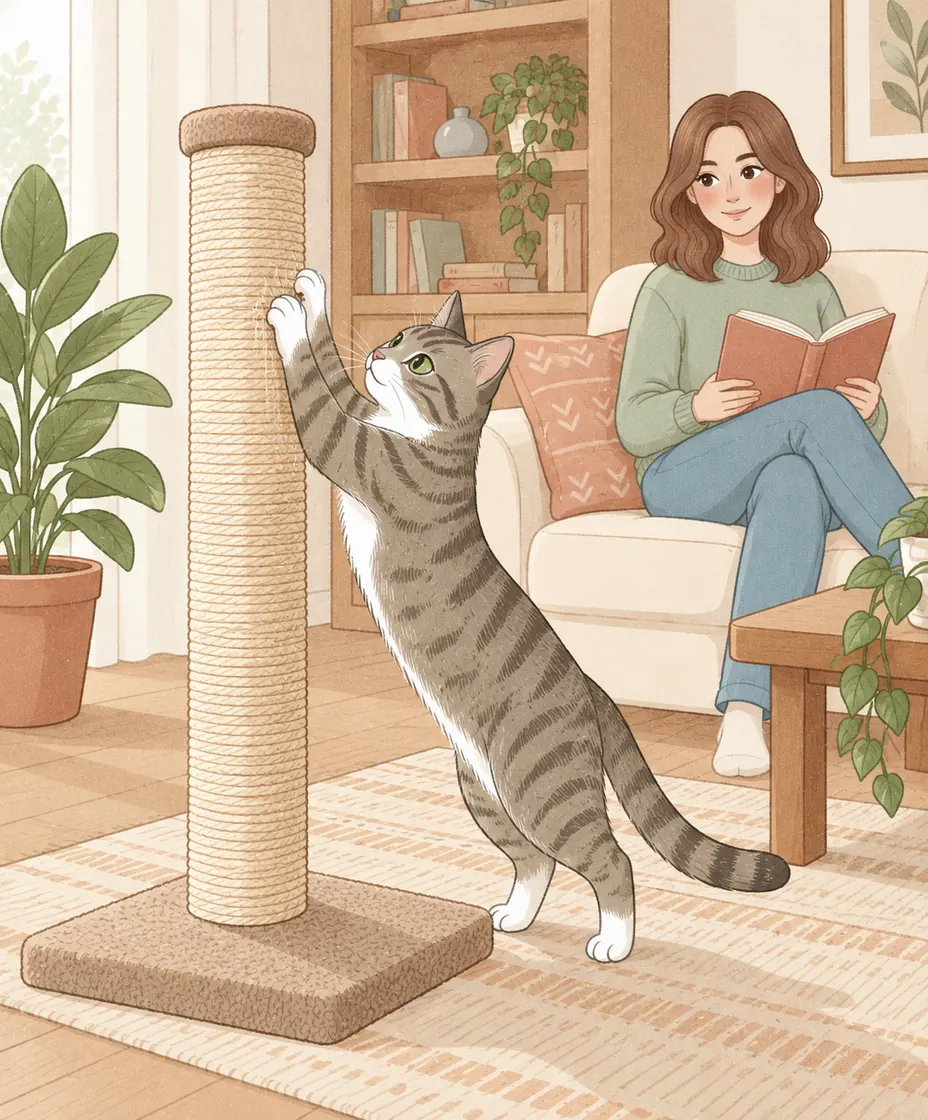
To encourage a cat to use a scratching post, put a stable, suitable scratching surface beside the place they already scratch and reward voluntary use. Offer the orientation and texture your cat prefers. Protecting furniture can help, but your cat still needs an accessible place to scratch.
Start with a place to scratch
Scratching is normal feline behavior. Cats Protection describes its roles in claw maintenance and communication, and recommends stable scratching options suited to the cat. The aim is to change the location of scratching while preserving an outlet for it.
Pounce’s Scratching Redirect program starts with the environment. A post hidden in a spare room may be easy for you to overlook and easy for your cat to ignore. Before practicing anything, notice the place your cat already chooses, the angle of the surface, and when scratching tends to happen.
Make a small scratching map
Write down three details from ordinary observation: the object, the body position, and the time or nearby activity. “Side of sofa, standing tall, after waking on the cushion” gives you more to work with than “scratches everything.” You do not need to provoke scratching to collect the information.
If the favorite surface is vertical, try a stable upright option that allows a comfortable stretch. If your cat chooses carpet, a horizontal scratcher may be a more sensible first experiment. Secure it so a push does not make it wobble or slide. Try one thoughtful change at a time so you can tell what helped.
A sofa-side practice plan
- Place the chosen scratcher next to the commonly used furniture area. Keep the approach clear and check that the surface will stay steady.
- During normal time together, watch for your cat choosing the scratcher. Have an appropriate small reward accessible without hovering over them.
- Mark voluntary scratching if your cat knows a marker, then deliver the reward near the scratcher. Reward the actual use rather than lifting the paws into place.
- Keep the setup consistent while your cat explores it. If the scratcher goes unused, reassess position, stability, orientation, and material before asking for more practice.
This sequence adapts Pounce’s environment-first approach. It is an example to adjust to your home, not a deadline for changing a habit.
Keep the alternative easy to choose
A practical furniture cover can help protect a surface while you establish an alternative, provided it is safe and does not create a snag or entanglement hazard. It does not replace the scratcher. Avoid shouting, spraying water, or physically dragging your cat over when you notice scratching elsewhere.
If you are using a wand toy for play near the scratcher, keep it a play invitation rather than a way to force claws into the material. Allow your cat to leave. In a shared home, provide scratching options in separate useful locations so one cat does not have to crowd another to use them.
Review what your cat actually chose
After several opportunities, compare your notes. If your cat used the new scratcher after waking but still chose the sofa during evening activity, consider whether the second location or moment needs another convenient outlet. Do not move a newly useful scratcher far away immediately just because you would prefer it out of sight.
A sudden change in scratching alongside hiding, conflict, spraying, discomfort, or other behavior changes calls for a broader assessment. Your veterinarian and an appropriately qualified behavior professional can help investigate. A scratching-post exercise cannot establish the cause of a new problem.
A little guidance goes a long way.
Follow illustrated lessons, take the next small step, and keep track of your cat’s little wins in Pounce.
Explore Pounce for iOSSources & how this guide was written
Pounce curriculum: Scratching Redirect. The three-part scratching map and sofa-side observation example are original practical additions; no household outcome or fixed timeline is claimed.
Sources checked September 12, 2026. This article is educational and has not been individually reviewed by a veterinarian. Our editorial policy explains our approach.