To keep your cat out of houseplants, first identify the plants and remove toxic ones from your home. Then prevent access to the remaining pots and offer an appealing alternative for resting or play. Chewing leaves, digging soil and sleeping in a pot need different arrangements. A trained cue is not protection when nobody is watching.
Check the plant before planning a lesson
If your cat may have eaten a toxic or unidentified plant, contact your vet immediately. Do not wait for illness to appear. Have the plant label or a photograph available, and explain what happened. Follow veterinary instructions rather than trying a home remedy.
ASPCA Poison Control warns that true lilies and daylilies can cause severe kidney injury in cats. Pollen and water from a vase containing true lilies can also be dangerous. Do not keep these flowers in a cat household, even on a shelf you think is unreachable. Suspected exposure needs immediate veterinary advice.
For prevention, check each plant by its botanical name against a reputable veterinary or welfare guide. Cats Protection recommends avoiding toxic plants altogether. Keep an unidentified plant inaccessible while you establish what it is; a photograph alone is not a safety clearance. Include bouquets and newly gifted plants in the check.
Source: ASPCA: Which lilies are toxic to pets? (April 6, 2022)
Notice what your cat does at the pot
Once safety concerns are addressed, describe the action you have already seen. ‘Gets into plants’ could mean biting a dangling leaf, scattering soil or curling up by a sunny window. You do not need to leave the pot available for another demonstration.
Use the table to choose a first change. These are household planning examples, not diagnoses of why a particular cat behaves this way. A pot can attract more than one activity.
| What you noticed | Change around the plant | A separate option to offer |
|---|---|---|
| Bites or bats at leaves | Move the plant to a room the cat cannot enter; check for leaves that fall outside the protected area. | Plan familiar interactive play elsewhere. Cat grass may be an option after checking it is suitable for this cat. |
| Digs or scatters soil | Make the entire pot inaccessible, including when you repot or water it. | Offer ordinary play away from the pot. If soil is being eaten, seek veterinary assessment instead of treating it as digging. |
| Lies or sits inside the pot | Move the pot and clear a separate resting space. | Try a stable, comfortable bed near the view the cat already chooses, with an easy way on and off. |
| Returns when you tend the plants | Arrange access before bringing plants or supplies out. | Let the cat spend that period in a comfortable area with their usual resources. |
Make the alternative easy to choose
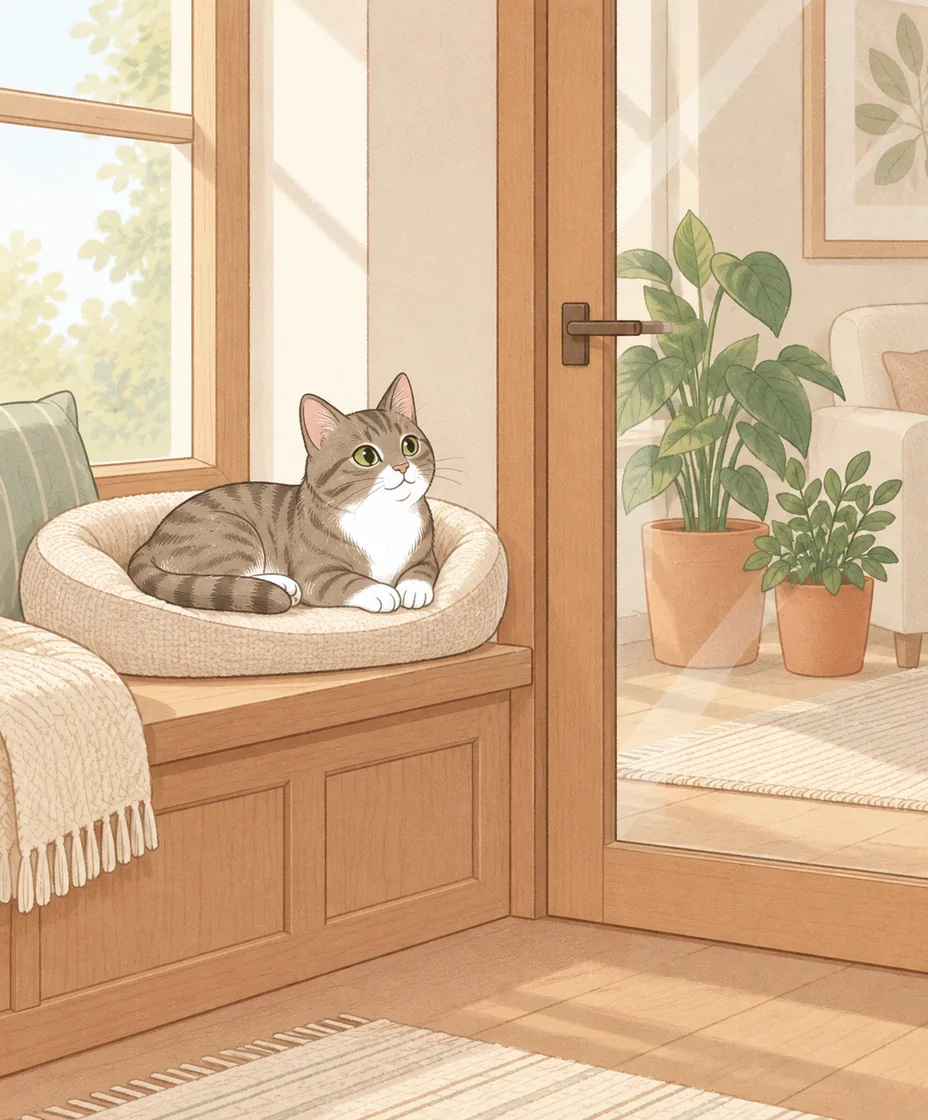
If the pot has become a resting spot, start with its location. A new bed across the house may not offer the same view or proximity to you. Our practical adaptation is to offer a stable resting surface near that preferred area while keeping the plants inaccessible. Do not turn the new perch into a stepping stone to the plants.
FelineVMA recommends appealing alternative perches and rewards for choosing them when addressing counter climbing. The same arrangement can guide voluntary resting practice here. This is an application of that principle, not a tested houseplant-training protocol.
For a comfortable cat who enjoys training, mark a voluntary step onto a mat and deliver a small suitable reward there. Let them leave. Build a brief pause only after approaching is easy; do not lift them onto the mat or require a long stay while you finish gardening. The full mat lesson below covers the progression.
Cats Protection suggests cat grass, play and environmental enrichment for indoor cats interested in plants. Choose grass intended for cats and check its growing conditions; pesticide contamination can make otherwise suitable grass unsafe. Grass does not replace protection for the other plants.
Source: FelineVMA: Training techniques for addressing undesirable behaviors
Include watering and cleanup in the plan
A protected plant may become accessible when it moves to the sink, a door is propped open or cuttings are left on a table. Write down the ordinary moment that defeats your arrangement, then decide what happens before that moment.
For example: ‘Plants come into the kitchen on watering day. The cat stays comfortably in the living room with the door closed until the pots are returned and the floor is clear.’ Keep normal water, rest and other needed resources available. Tell anyone who shares plant care about the routine.
Afterward, check for dropped leaves, spilled soil and supplies left out. Avoid spraying the cat or building a startling trap around a pot. FelineVMA advises against punishment because it can increase fear and interfere with learning. A barrier or removal plan should work without making the cat afraid to explore their home.
Source: FelineVMA: Training techniques for addressing undesirable behaviors
Eating soil needs a different conversation
Repeatedly eating soil or other non-food material warrants a veterinary assessment. Medical and behavioral causes are possible; do not assume a missing nutrient or add supplements on that basis. Note what is being eaten, when it began and any changes in appetite or ordinary behavior. Possible poisoning remains an immediate call, not something to monitor through training.
We make Pounce, which includes Go to Mat / Place. It can guide voluntary practice at a separate resting spot; it does not identify plants or treat poisoning or non-food ingestion. This article adds the plant-activity table and watering-day plan. Sources and curriculum were checked October 15, 2026. Prepared with AI assistance; not individually reviewed by a veterinarian.
A little guidance goes a long way.
Follow illustrated lessons, take the next small step, and keep track of your cat’s little wins in Pounce.
Explore Pounce for iOSSources & how this guide was written
Complete Go to Mat / Place module checked in content/modules.json. Product claim limited to voluntary mat practice. Original plant-activity table and watering-day routine; no invented plant-specific curriculum, toxicology service, guaranteed safety or fixed training timetable.
- Cats Protection: Plants poisonous to cats
- ASPCA: Which lilies are toxic to pets? (April 6, 2022)
- FelineVMA: Training techniques for addressing undesirable behaviors
- VCA: Pica in Cats (updated November 21, 2025)
Sources checked October 15, 2026. This article is educational and has not been individually reviewed by a veterinarian. Our editorial policy explains our approach.