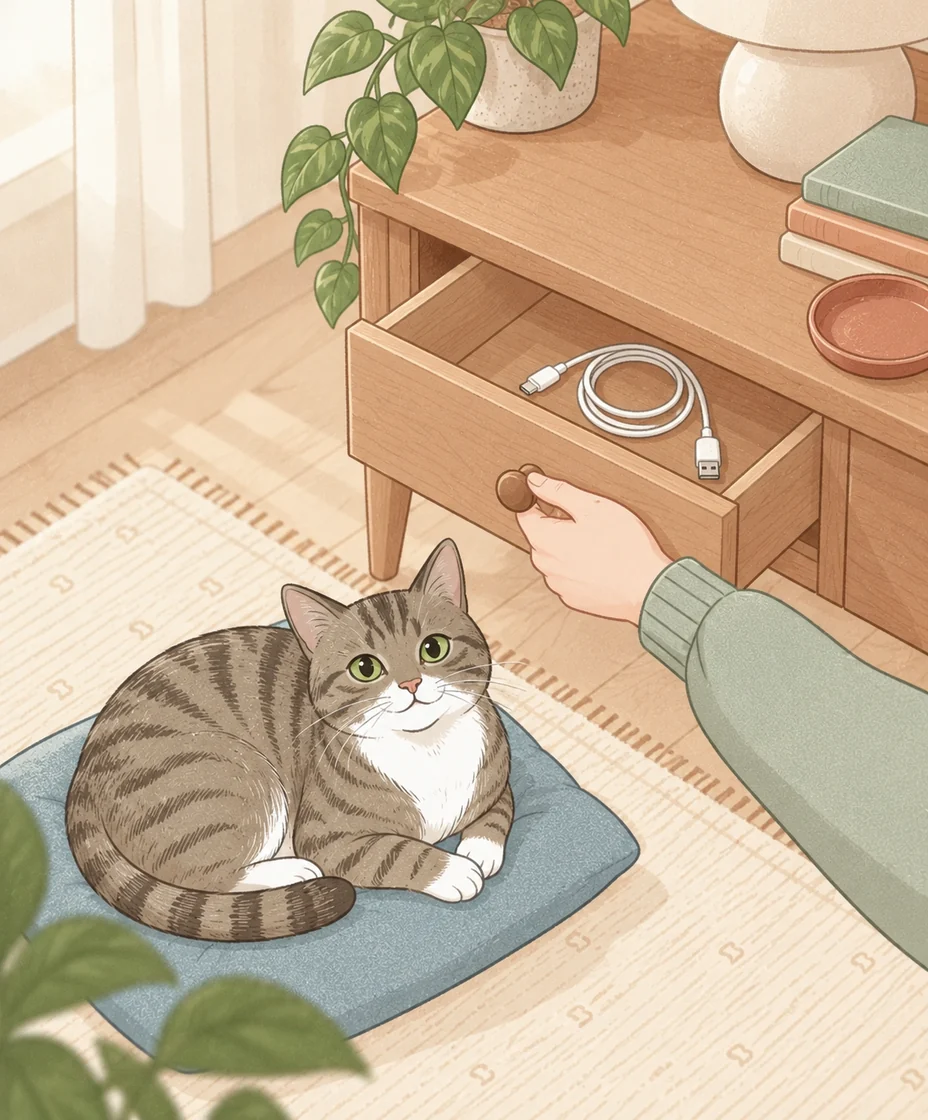
If your cat chews cords, prevent access before another training attempt: put unused cables away and arrange inaccessible routes for equipment you need to use. A cue or a distraction cannot protect an exposed wire when you are absent. Suspected electric shock or swallowed material needs immediate veterinary advice. New or persistent chewing also needs assessment.
Deal with a possible injury first
If your cat may still be in contact with live electricity, do not touch the cat or cable. Switch off the power only if you can do so safely, and get emergency help if you cannot. PDSA advises veterinary assessment after an electric shock because injuries can be hidden or delayed. Contact your vet immediately even if your cat seems normal afterward.
If pieces of cable or another non-food item may have been swallowed, call your vet promptly rather than waiting for symptoms. Cats Protection’s behavior guide specifically advises immediate contact after suspected non-edible ingestion. Tell the team what material is involved and when it happened; follow their instructions. The household plan below is prevention, not first aid or treatment.
Follow each cable all the way to the device
With your cat comfortably elsewhere, inspect the rooms they can enter. Look beyond the wall socket: a lead can be tucked behind a desk while its other end hangs over the arm of a sofa. Include chargers brought out only at night and cables in bags left open on the floor.
Cats Protection recommends cable tidies and clips to keep wiring out of reach. Electrical Safety First likewise advises avoiding trailing cables and using suitable covers or inaccessible routing. Check the whole arrangement rather than assuming that a sleeve, a high shelf or the word ‘protected’ makes a cable unreachable.
Put disconnected cables you are not using into closed storage your cat cannot open. Keep damaged equipment out of use and ask the manufacturer or a qualified repair professional what to do; do not cover bite damage and resume using it. Follow equipment instructions for ventilation and cable routing. If you cannot make a working setup inaccessible, prevent your cat from entering that area while you arrange a solution.
Make a cable map you can actually use
Our checklist records the exposed part, when it appears and what will change. Fill it in without bringing your cat over to test a barrier. ‘Usually hidden’ is less useful than identifying the moment a charger comes back out.
Agree who puts each item away. A visitor charging a phone can undo a carefully arranged room without realizing it. Recheck the route whenever furniture or equipment moves.
| Place or moment | Check | Plan before the cat has access |
|---|---|---|
| Phone beside the bed | Does a loose end hang down after unplugging the phone? | Choose an inaccessible charging location; store the disconnected cable afterward. |
| Laptop during work | Does moving the chair or laptop expose a new loop? | Arrange the complete route before work, including the device end. |
| Behind a television or console | Can the cat reach from the side, underneath or a nearby shelf? | Resolve those entry routes; keep equipment ventilation clear. |
| Spare leads and travel bags | Can a zip or drawer be left open? | Use secure closed storage and include it in the household cleanup routine. |
Give your vet observations, not a guessed motive
Chewing when you sit at the computer does not establish that attention is the cause. VCA’s pica guidance describes several possible medical and behavioral contributors to eating non-food objects, with assessment before a treatment plan. Do not diagnose boredom, a dietary deficiency or a compulsive disorder from one habit.
Record when the chewing began, the items involved, whether material is missing, and changes in appetite or ordinary behavior. For example: ‘New this week; two charger leads damaged; unsure whether any pieces were swallowed.’ That uncertainty belongs in the call to the vet, not in an experiment with another cable.
Do not leave a hazard available to see whether ignoring the behavior works. Avoid shouting, spraying or using homemade substances on cables. VCA advises against punishment because it can increase anxiety. Ask for a plan that addresses both access and the individual cat’s needs.
Plan an ordinary activity away from the equipment
Once immediate concerns have been addressed and cables are inaccessible, arrange familiar play or a comfortable place beside you before a busy period. Choose activities suitable for this cat; an item sold as a toy still needs checking if they chew pieces off it. Ask your veterinary team about appropriate options when non-food chewing persists.
For a comfortable cat who enjoys training, a familiar mat can offer a nearby destination. Practice that skill separately, with suitable rewards and room to leave. Keep cable protection in place even when the cat chooses the mat. There is no need to recreate the dangerous behavior to begin a useful activity.
We make Pounce, which includes Gather Your Tools and Go to Mat / Place. Those lessons can organize ordinary practice; they do not diagnose chewing or make electrical equipment safe. This guide adds the cable-access map and observation note. Sources and curriculum were checked October 5, 2026. It was prepared with AI assistance and has not been individually reviewed by a veterinarian.
A little guidance goes a long way.
Follow illustrated lessons, take the next small step, and keep track of your cat’s little wins in Pounce.
Explore Pounce for iOSSources & how this guide was written
Pounce curriculum: complete Gather Your Tools and Go to Mat / Place modules checked. Claims limited to preparing ordinary practice and a voluntary station; no invented cable-chewing treatment program, guaranteed safety, fixed timeline or diagnostic claim. Original cable-access map and veterinary observation note. Sources checked October 5, 2026.
- PDSA: First aid for an electric shock in pets (March 2020)
- Cats Protection: Behaviour Guide, 2021 edition (page 101)
- Cats Protection: Keeping your cat safe in the home
- Electrical Safety First: Advice for pet owners
- VCA: Pica in Cats (updated November 21, 2025)
Sources checked October 5, 2026. This article is educational and has not been individually reviewed by a veterinarian. Our editorial policy explains our approach.