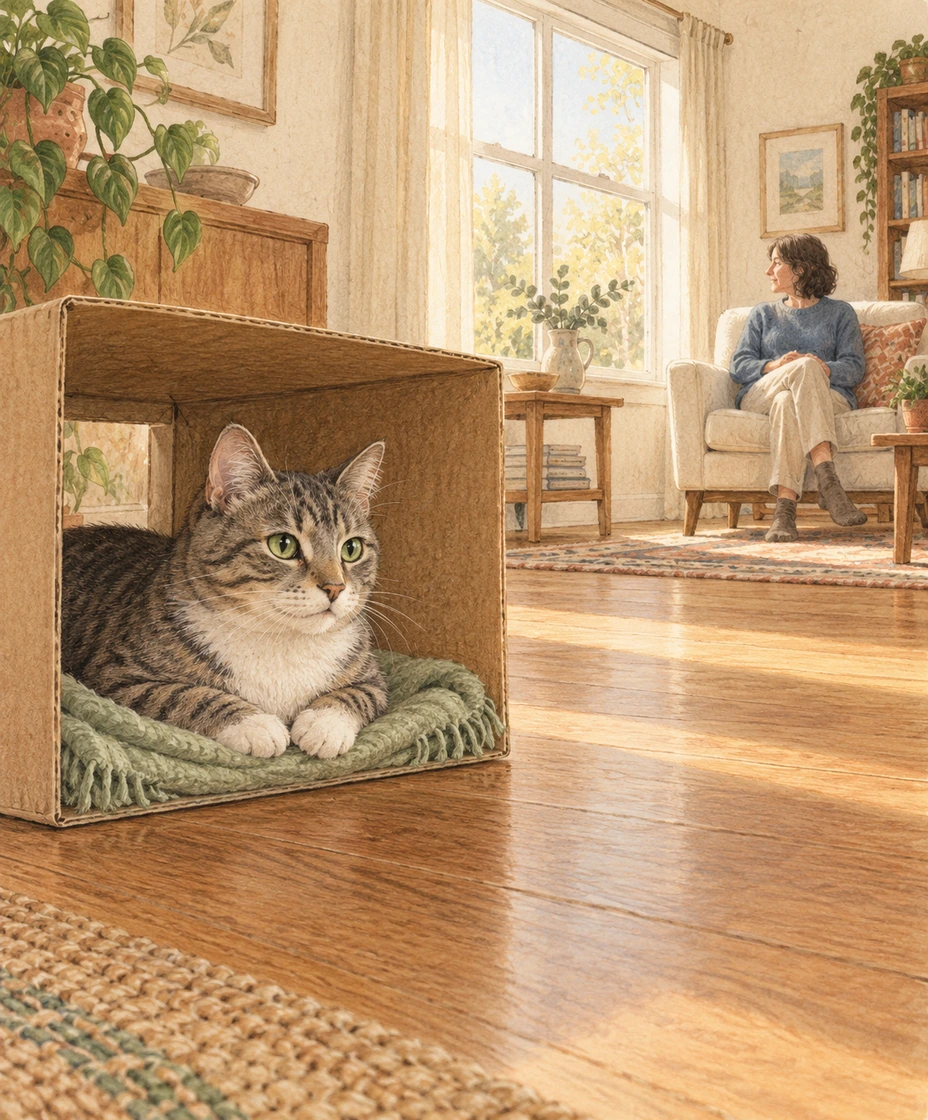
If your cat is scared of visitors, arrange a quiet retreat before guests arrive and let your cat choose whether to appear. Ask visitors to leave hiding places alone and avoid reaching, staring or picking the cat up. A successful visit can include no greeting at all. New fear, persistent distress or aggression needs individual veterinary and behavior support.
Make comfort the goal of the visit
You can enjoy having people over without making your cat part of the welcome committee. Cats Protection advises introducing people gradually and allowing a cat to make the first move. Some cats remain cautious around unfamiliar people; becoming everyone’s lap cat is not a necessary outcome.
Separate two decisions: how to manage this visit, and whether to work on familiarity later. A noisy dinner party is a poor moment to begin an exercise that needs your attention. For today, decide where guests will spend time and where your cat can remain undisturbed.
Prepare the retreat before the doorbell
Choose a familiar quiet area with a comfortable hiding place and access to ordinary resources: water, food according to the usual routine, litter facilities and somewhere to rest. Keep feeding and toileting areas separate. A guest bedroom is a poor retreat if visitors will repeatedly enter it for coats or bags.
Pounce’s The Fearful Cat curriculum begins with a secure home base and quiet presence. Apply that preparation before a visit: check the actual route between the hiding place and resources. Your cat should not have to squeeze past a guest’s chair to reach the litter tray.
If you plan to close a room door, first establish that your cat can be comfortable there during ordinary quiet time. Do not discover during the party that this arrangement causes panic. Ask your veterinary or behavior team for another plan if comfortable separation is difficult.
Cats Protection describes hiding as a coping behavior and advises guests not to seek cats out in their hiding places. Avoid pulling your cat out for introductions or photographs. Keep escape prevention at the exterior door separate from the choice to move around safe indoor space.
Tell guests what to do before they arrive
A short message removes the pressure to improvise a greeting. Here is wording you can adapt:
“Our cat may stay out of sight, and that’s fine. Please leave their quiet room alone. If they come over, keep your hands to yourself at first and let them investigate. Please don’t follow, pick them up or reach into their hiding place. I’ll let you know if an interaction is welcome.”
VCA’s visitor guidance specifically recommends asking guests not to stare at or reach toward a worried cat. Give children the same clear boundary, with an adult responsible for supervising it. Sitting still near a cat does not create an obligation for the cat to approach.
Keep a quiet visit simpler than a greeting lesson
- Arrange the familiar retreat and secure the entrance before opening the outside door. Ask the visitor to sit away from your cat’s usual route.
- Continue an ordinary quiet activity together. Leave your cat free to stay out of sight. Do not call repeatedly, carry them in or move food toward the visitor to draw them closer.
- If your cat appears, keep the arrangement easy. A glance from across the room does not call for an outstretched hand. Let investigation end without adding touch or a trick.
- If your cat withdraws, stop inviting contact. Reduce the activity or end the visit when needed. Do not follow them to see whether they are ready to try again.
- Afterward, restore the usual routine and note what happened. There is no required increase in visit length or closeness next time.
For a cat without a history of threatening or injuring visitors, a later, brief visit from one calm person may be a manageable opportunity to observe. Cats Protection recommends meeting people one at a time, with quiet voices and room to withdraw. The sequence below is our household planning example, not a treatment protocol for aggression.
Record the event that changed the response
“Hid all evening” leaves several questions unanswered. Did your cat remain in their usual retreat, use their resources and return to ordinary activity afterward? Or did they keep moving between hiding places whenever someone stood up? Record what you can observe without disturbing them.
A useful note has three parts: visitor activity, cat’s response, and what you changed. For example: “Guest sat reading; cat rested in doorway. Guest stood up; cat retreated. We ended the visit and kept the hallway clear.” That identifies a movement to discuss or make smaller in a future plan. It does not diagnose fear from one posture.
Do not treat eating a reward, staying motionless or coming closer as proof that more interaction is welcome. Pounce’s confidence lessons separate quiet presence, approach and touch; our visit plan keeps those decisions separate too.
Get help before another difficult encounter
A cat following guests while growling, blocking their movement, lunging or biting needs a safety plan. Do not recruit a visitor to keep approaching as a test. VCA advises physical separation while triggers remain uncontrolled, avoiding punishment, and veterinary assessment with behavior support for difficult or unpredictable aggression. Arrange separation in advance without grabbing an aroused cat.
If fear is new or worsening, or eating, movement or litter-box habits have changed, contact your veterinary team promptly. Do not wait for a set number of training sessions or days without food. Tell them if your cat cannot settle in the proposed retreat; that affects the plan as much as the response to guests.
We make Pounce, which includes The Fearful Cat. This guide adds a visitor briefing and an event-based observation note. Sources and curriculum were checked October 3, 2026. It was prepared with AI assistance and has not been individually reviewed by a veterinarian. It promises no timetable for sociability.
A little guidance goes a long way.
Follow illustrated lessons, take the next small step, and keep track of your cat’s little wins in Pounce.
Explore Pounce for iOSSources & how this guide was written
Pounce curriculum: The Fearful Cat. Quiet home-base preparation, voluntary presence and separate approach/contact stages inform this household visit plan. The guest message and observation example are original editorial tools, not an individual behavior treatment.
- Cats Protection: Cats meeting other people
- Cats Protection: Shy cats
- VCA: Cat Behavior Problems — Aggression Towards Visitors (updated August 29, 2025)
Sources checked October 3, 2026. This article is educational and has not been individually reviewed by a veterinarian. Our editorial policy explains our approach.